Skip to content

Recommendation: Metadating

Recommendation: Metadating published on No Comments on Recommendation: Metadating

When the Geek & Sundry channel started up on Youtube, I was excited but decided that there was really only one show I wanted to watch regularly, Tabletop. That turned out to be a bad idea because their lineup has changed quite a bit since, including the addition of a show I only discovered this weekend but already love: Metadating. Metadating is a long– usually almost two hour– show that’s really a Google hangout of three guys playing (well, one guy playing and two others watching) a video game involving romantic relationships and discussing it as they go. Now, this already has potential if you just enjoy gaming and you’re the kind of person who likes watching other people play (and I do), but what really makes the show special is who these three guys are.

The show is hosted by Sean Plott, or Day[9], an e-sports commentator for Starcraft 2, and two game designers, Bill Graner and Sean Bouchard (Bouchard did a TEDx talk on the intersection of gaming and education which you can see here). The three have a ritual of introducing each episode by talking about what they’re drinking that evening and the show moved from “family friendly” to “parental advisory: explicit language” on the second episode, and a good time is had by all. But the best part, by far, is that these guys actually know what they’re talking about, and it’s really cool to watch and listen to people who know both gaming and relationships discuss the depiction of relationships in games. Especially when, as you know quite well if you’re a gamer yourself, the topic isn’t exactly central most of the time. Slaughtering people via one means or another– explosives, swords, guns– generally take precedence, for understandable reasons. It’s exciting, and it’s easy. Relationships are hard. Or at least, they’re hard to depict in a way that makes sense and is compelling rather than seeming laughably fake, and laughably fake is more acceptable or even welcome in a lot of aspects of gaming, but relationships aren’t one. Especially romantic relationships, which are conspicuous in video games by their rarity and are even more rarely a central focus or goal, and when they are a goal are often depicted….questionably. I guess my standards are low, because I was gobsmacked  when the word “narrative” first came out of the mouth of one of the hosts (Bouchard, most likely) and I realized that this wasn’t just going to be a show of three guys drinking and laughing at video games.

On Youtube the comments are, as you’d expect, full of reactions from people who love the game being discussed in that particular episode who are bristling to criticism of it (“You just didn’t play enough to get the full experience! You don’t know what you’re talking about!”) and the occasional person wishing that they’d “get a lady on.” Yeah, it makes sense that if you’re going to do a show about the depiction of romance in video games, you might just want a female perspective. But Plott, Graner, and Bouchard all went to grad school together (USC’s School of Cinematic Arts) and seem to know each other well, and rapport is so valuable for shows like this. And I’ve honestly been impressed by the even-handedness of the discussion so far.

So. You know. If you’re into that sort of thing….check it out.

And I now have two gaming-related books on my Goodreads “want to read” list:

Full of Sound and Fury: The Media Response to Dennett

Full of Sound and Fury: The Media Response to Dennett published on No Comments on Full of Sound and Fury: The Media Response to Dennett

This post previously published as an article in the journal Method & Theory in the Study of Religion in 2008.

What is the best way for a well-known, unabashedly atheistic philosopher to have a discussion with the American general public about the value and nature of religion? It is not an easy question to answer. Daniel Dennett’s recent undertaking of just that task in his book Breaking the Spell has certainly not been short of controversy or criticism, which is entirely as he expects. “By asking for an accounting ofthe pros and cons of religion,” Dennett explains, “I risk getting poked in the nose or worse, and yet I persist” (257). Clearly, he believes the potential nose-poking an acceptable risk to take in order to deliver an urgent message to Americans: that they need to take a hard look at the matter of why religious belief and behavior is so compelling in the first place, as well as what religion is really “good for,” and for whom. The appropriate way to address this matter, Dennett argues, is through a scientific approach-that is, one based on methodological naturalism. Contra Eliade, there will be no privileged space for the sacred, no sense in which religion will be considered sui generis. Dennett dwells in the overlapping realms of evolution and cognition, and it is in these terms that his inquiry takes place.

But wait a minute …. hasn’t this inquiry been going on for quite some time already? What exactly is Dennett trying to do which hasn’t been done already by scientists such as Tom Lawson and Bob McCauley, Pascal Boyer, D. Jason Slone, David Sloan Wilson, and Walter Burkert? The main, critical difference is that Dennett is not only trying to present the best explanations for religion from cognitive science so far, but additionally to a) advocate for this form of inquiry in the first place to the American general audience, and thereby b) encourage a detached evaluation of the purposes (pragmatic and normative) that religion may serve for such an audience. Make no mistake; Dennett is wading into the culture war. And he is trying to do so from the vantage point of the concerned counselor, but whether the audience will accept him in this role is a different story.

A reader used to Dennett’s previous work, expecting a treatment of religion along the lines of Consciousness Explained, may well find Breaking the Spell a bit of a shock. The reason for this is itself an interesting thing to contemplate. The book is explicitly speculative, offering tentative explanations but stipulating that the exploration of religion as a naturalistic phenomenon still has very far to go. Fair enough. But nevertheless Dennett wants to use these ideas to put forth the notion that maybe, just maybe, religion not only does not benefit us in the proximate, here-and-now sense (as opposed to the ultimate sense, a distinction evolutionary accounts often make), but perhaps it doesn’t even benefit us ultimately. perhaps it exists simply to further itself. To make this case he must establish it on memetic theory, painting a picture through a series of metaphors of religion as a possibly parasitic, possibly symbiotic sort of virus that infects humans because of certain qualities which make it appealing because of adaptations we have evolved for other purposes. Certain inference systems we already have make certain aspects of religion “catchy.” It is an epidemiological account, applied to religion previously by Boyer. But it’s a bit unfortunate that Dennett had to introduce this concept, indeed introduce the book, by likening religion to the lancet fluke-a parasite that invades the brain of an ant and causes it to climb to the top of blades of grass in order to be more easily consumed by cows, into whose bellies the parasite seeks to travel. A cunning analogy? Certainly, but not very flattering. Dennett draws this comparison to point out that humans have evolved to a point at which our own biological fitness-producing a larger number of grandchildren than our neighbors-has taken a backseat to proximate interests. Democracy, freedom, justice-these are “ideas to die for,” as he puts it, and we’re comfortable admitting that. But we wouldn’t say that the ant is “dying for” the lancet fluke. Rather, it is killed by, which is a different kettle of fish entirely. And that is why memetic theory, even (or especially) if it is true, is so discomforting. But then again, some respondents simply find the idea vacuous. Columnist Andrew Brown of the Guardian complains that Dennett “sees the difficulties [of theorizing about religion], marches bravely into the swamp and then – about halfway through the book, at exactly the point where we’re wondering how to reach firm ground – he stops, inflates a hot air balloon that’s labeled “memes”, climbs into it and floats away” (February 25, 2006). H. Allen Orr of the New Yorker agrees: “The existence of a god meme is no better established than the existence of a god” (March 27,2006).

Dennett wants to argue that religious memes are ideas that we sometimes die for or kill for, but more commonly devote our lives to, and that perhaps we should step back and contemplate whether we ought to be doing so. But this requires exhorting us to “rebel against the tyranny of selfish replicators,” as Dawkins originally put it when he coined the term in 1976, leaving us to ask precisely who is doing the rebelling, and with what. For it seems that everything is a meme. It remains highly questionable whether the meme of memetic theory-indeed, of naturalistic inquiry into religion-can be more infectious than the religious memes themselves, and perhaps Dennett is being too optimistic to expect them to be. I suspect that he would say that he has to espouse them regardless.


What kind of counselor? 

Probably the most interesting thing about the reactions to Dennett’s book is the perceptions of how he treats his reader. The book is sprinkled with particular asides to particular types of audiences, ostensibly so that he can cover all of his bases and acknowledge the variety of worldviews that people might bring to his work. But quite a few readers have deemed Dennett not to have the best bedside manner. In a particularly scathing appraisal in the New York Times Book Review, Leon Wieseltier complains that “if you disagree with what Dennett says, it is because you fear what he says … Dennett’s own ‘sacred values’ are ‘democracy, justice, life, love and truth.’ This rigs things nicely. If you refuse his ‘impeccably hardheaded and rational ontology,’ then your sacred values must be tyranny, injustice, death, hatred and falsehood” (February 19,2006). Rupert Sheldrake agreed in the Toronto Globe and Mail that “he is pompous when he tries to persuade, even bully, religious believers to go on reading his book, and patronizing toward those who have not achieved the intellectual superiority to which atheists lay claim” (February 4, 2006). But how much of this reaction might stem from Dennett’s candid and proud self-description of atheism? Sheldrake continues that “his commitment to atheism makes him dismiss out of hand the significance of religious experiences.” Adam Kirsch of the New York Sun accuses the book of “frank hostility to religion” and objects that because of his own lack of faith, Dennett is missing the point completely: “at the heart of organized religion, whether one accepts or rejects it, is the truth that metaphysical experience is part of human life. Any adequate account of religion must start from this phenomenological fact. Because Mr. Dennett ignores it, treating religion instead as at best a pastime for dimwits, at worst a holding cell for fanatics, he never really encounters the thing he believes he is writing about” (February 8, 2006).

What sort of response might the book have received had Dennett made no mention of his personal (a)religious convictions? It’s difficult to tell, and as a vocal proponent of the “bright” movement, Dennett would likely argue that that would be missing the point (July 12, 2003). Attempting to give an objective account of religion and its value should not mean taking for granted that religion is true, therefore there shouldn’t be any problem with a person endorsing just that approach who isn’t religious himself. Of course to some people, this makes about as much sense as a tone-deaf person studying music. But such a person can study music-he can study it from the detached perspective of examining how people produce it and how it affects them, which is precisely how Dennett proposes to study religion. That the old insider/outsider problem should rear its ugly head again comes as no surprise, however we must not make the mistake of assuming, as Dennett himself occasionally seems to do in advance, that any objection to his tone or presentation of the issues should be based on that.

Near the end of the book, Dennett describes believing in God as “a kind of falling in love”- no rational evaluation is made, but rather a kind of helplessness in the face of the object of one’s affection (or faith) which results in a steadfast and enduring commitment (254). And ind~ed, his tone occasionally makes Dennett sound like he is playing the role of relationship counselor to an abused spouse. But he may be up against a love much stronger than he bargained for-after all, people tend to fall in love with more than one person in the course of their lives, and at least with another human you have their continuing presence directly confronting you to remind you of their flaws. When one’s love object is perfect and immaterial, who (or what) can compete? A blogger known as Razib on the blog Gene Expression wrote, “Dennett’s schtick that those who think that religious people can’t analyze their beliefs rationally are being patronizing seems really laughable to me. Most atheists I know have a hard time getting around the fact that many people who are extremely bright (no pun intended in the context of Dennett) sincerely believe that supernatural agents exist and affect the world around us … If the likes of Dennett wish to examine religion as a ‘natural phenomenon,’ they need to acknowledge that perhaps for many humans it is as crucial to their cognitive functioning as elimination is to their digestive system” (March 5, 2006). And indeed, that is exactly the basis on which Kirsch argues that Dennett wants to eliminate religion: “By showing that we evolved to believe, Mr. Dennett hopes to reduce belief to the status of an ordinary human disposition, no more mysterious than our appetite for sweets or our sexual drives. And from there, he hopes, it will be only a short hop to demolishing belief altogether, as a vestige of our prehistory that has become maladaptive in an advanced civilization” (February 8, 2006). Dennett does make the argument that religious memes have become “domesticated” over the years, requiring human stewards for their maintenance and reproduction in a way similar to that in which sheep require shepherds. It would not be too far off the mark to suggest that he is also arguing for them to be domesticated in the sense of pacification as well. Not the absence of Christianity or Islam, but rather a “toothless” version, which doubtless is frightening enough to some.

But … is there a god? 

Perhaps the issue that most readers on either side of the fence, theistic or atheistic, anticipated Dennett addressing was the one that has fascinated analytic philosophers of religion for years does God exist? “Is the theistic account ofthe cosmos true or false? Dennett, amazingly, does not care,” writes Wieseltier. ”’The goal of either proving or disproving God’s existence,” he concludes, is “not very important'” (February 19,2006). And indeed, precious few pages are devoted to the question. Precisely because the topic has been quarrelled over for so long without a good record for converting people from either side to the other, Dennett is not especially interested in wading through the arguments, whether they be ontological, cosmological, or teleological (readers interested in the latter argument would be better advised to read Darwin’s Dangerous Idea). However, this is not to say that attributes ascribed to God cannot be tested-and this is precisely what Dennett advocates. If a theist wishes to affirm the existence of a god with empirical effects on the world, such as miracles of healing, then these can and should be proved or disproved using empirical methods.

Such a god, a creator god who is a person to whom you could pray, who intervenes in the world, is the one in relation to whom Dennett is an atheist (“bright”). This he makes clear in the book, though it is not (in my impression) the explicit mission of the book to make all readers into atheists as well. There are obviously those who disagree, and it is difficult to tell whether they would do so regardless of what Dennett wrote, provided he also included the commentary about being a “bright” and being proud of it. Does this mere admission amount to evangelism? And does Dennett’s outspoken atheism, in combination with his reliance on and endorsement of evolutionary theory both in past books and the most recent one, equate evolution itself with atheism? Florida State philosopher of biology Michael Ruse seems to think so, as does Intelligent Design proponent Michael Dembski, and a couple of writers at the Guardian seem uncertain, after a recent print exchange which took place in a variety of formats.

The first shot was thrown by someone who wasn’t actually a participant in the conversation- Wieseltier, who in addition to being personally offended by Breaking the Spell, pronounced it a “sorry instance of present-day scientism,” and other reprehensible things. After reading this review, Ruse decided to email Dennett and jab him about it, to which Dennett replied that he thought the New York Times Book Review under the spell of the “Darwin dreaders,” and suggested that Ruse might be unwittingly helping them out. The exchange grew yet more heated, with Ruse taking umbrage at this comment and taking the opportunity to note that he didn’t find Dennett’s new book worthy of him, with a culminating comment: “I think that you and Richard are absolute disasters in the fight against intelligent design – we are losing this battle, not the least of which is the two new supreme court justices who are certainly going to vote to let it into classrooms – what we need is not knee-jerk atheism but serious grappling with the issues – neither of you are willing to study Christianity seriously and to engage with the ideas – it is just plain silly and grotesquely immoral to claim that Christianity is simply a force for evil, as Richard claims – more than this, we are in a fight, and we need to make allies in the fight, not simply alienate everyone of good will” (February 21, 2006). Then for some reason Ruse decided to pass on these emails to William Dembski, who promptly (probably gleefully) posted them on his blog Uncommon Descent. 

The exchange was then picked up by the Guardian’s Andrew Brown, earlier the author of a less-than-flattering review of the book, who described the blow-by-blow in a gossipy tone as a battle between evolutionists on the question of how best to combat creationism (March 6,.2006). Then columnist Madeleine Bunting, also of the Guardian, related the matter as part of a piece entitled “Why the intelligent design lobby thanks God for Richard Dawkins,” agreeing with Ruse that both Dawkins and Dennett provide unintentional aid to ill proponents because of their ferocity and frank atheism. She quotes Ruse explaining a particular concern: “If Darwinism equals atheism then it can’t be taught in US schools because of the constitutional separation of church and state. It gives the creationists a legal case. Dawkins and Dennett are handing these people a major tool” (March 27, 2006).

Dennett then replied that this was nonsense, as the public schools in American routinely teach facts that conflict with certain religious doctrines-especially in biology (no virgin births, sony) and geology (the earth’s a bit older than 6,000 years).2 But we need to pause now and consider an element of Ruse’s allegation a bit more closely. “If Darwinism equals atheism” … what exactly does that mean? There are several possibilities. Clearly, Ruse does not himself believe that Darwinism “equals” atheism, but he is afraid that Dawkins and Dennett are giving the impression that it does, so the precise meaning must be considered. And would any possible meaning make his statement of the implications correct?

Perhaps he means that evolution forces atheism-that upon hearing about evolution, any theistic person will be instantly de-converted. This obviously is not the case, and no sensible person would claim such since all one need do to disprove it would be to produce a theistic evolutionist (Kenneth Miller would do the job nicely). Then perhaps Ruse is saying that evolution means atheism-that describing evolution is the same as explaining that God does not exist. This would be a hard one to argue, since there is no reason to mention God at any point in a lesson on evolution (one could argue that this in itself is the evidence, though one need not mention God in order to explain how to bake a cake either, and it would be daft to say that cake-baking “means” atheism). Then maybe Ruse means that, rationally considered, evolution makes belief in God incoherent or at least unnecessary. This is a possibility. At least with the respect to the type of god regarding whom both Dawkins and Dennett are atheists, Dawkins at least would likely affirm this to be true. Dennett is rather more cautious, though in his reply to Bunting he notes that “A few evolutionists, such as Ruse and Eugenie Scott, the director of the National Center for Science Education, favor the tactic of insisting that evolutionary biology doesn’t deny the existence of a divine creator … Many others, such as Dawkins and myself, fear that the evasiveness of this gambit fuels suspicion and so contributes to ongoing confusion in the US” (April 4,2006).

I think it would be a fair assessment to say Dennett believes that evolution makes consistent the justification of atheism (if atheism needs justification), and logically negates the type of god in whom most Americans profess belief (whether they really believe, or merely believe in belief), the type of god who receives so much space in his book. Is this what it means to “equal” atheism? And if so … so what? What are the implications?

This year’s meeting of the Human Behavior and Evolution Society featured a lunch-time presentation entitled “It’s Time to Speak Up: A Panel Discussion on the Role of Evolutionary Scientists in Public Discourse.” Dennett was a member of the panel, as was U.S. District Judge John Jones, who presided over Kitzmiller v. Dover Area School District. After Jones had given his talk (introduced with a standing ovation), Dennett stood to praise all of the work that Jones had done, and to take exception to a single statement from the conclusion of the Dover ruling: “Repeatedly in this trial, Plaintiffs’ scientific experts testified that the theory of evolution represents good science, is overwhelmingly accepted by the scientific community, and that it in no way conflicts with, nor does it deny, the existence of a divine creator [emphasis added].” He questioned whether these scientific experts had had their “feet held to the fire,” and was thankful (with a wink) that he and Richard Dawkins had not been the experts called to the stand.

Michael Ruse and those who agree with him may be doing their best to make evolution palatable to the religious believer in the U.S., and may even be correct that people such as Dennett and Dawkins are not helping their cause. But that is a matter of public relations, not constitutional rights, and anyone who tried to make a freedom of expression case on the grounds that evolution “equals” atheism would not have a prayer of winning. If the claim is going to be made (repeatedly) that evolution is compatible with belief in God, then perhaps we ought not leave it at that. Perhaps an attempt ought to be made to explain exactly how it is compatible, and with which kindof god. This is the case Dennett is making, in the name of forthrightness. In every issue on which science is in conflict (or apparently in conflict) with public opinion, there will be those who lean more toward palatability, and those who lean toward “Just the facts, ma’am.” It seems pretty clear who is on which side in this matter. Dennett’s political campaign is not just for the acceptance of evolution, but for the acceptance of atheism-for the population of “brights” in the country. How can he reasonably be expected to remain silent about one while espousing the other?

In Breaking the Spell, Dennett really pulls no punches. The urgency of the book, the candidness of his tone, and his moral arguments mark it as not merely as an introduction to the cognitive science of religion, but an overt attempt to persuade Americans of faith (and without) to carefully, objectively, consider what that means for them as individuals and for society. This in itself would earn the book a negative response from many, leaving aside the question of whether Dennett comes off as genuine in his open-minded approach of “religion may be good for us or bad-let’s find out.” That will have to be left to the reader. Many have waded in on the subject already, and doubtless many more will follow. But when doing so, hopefully they will remember that most of Dennett’s arguments can easily be made by a theist as well, and become intrigued to discover more about what the scientific study of religion has to offer. After all, we’re still only at the beginning, and there are exciting times ahead.

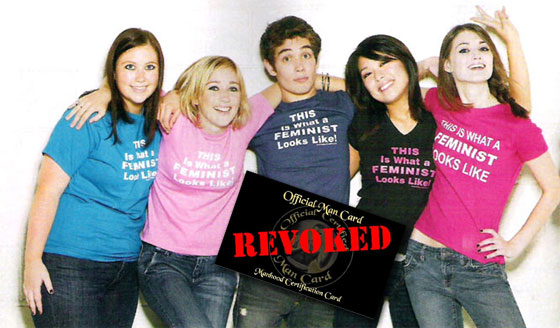
Shame, shame, know your name

Shame, shame, know your name published on 1 Comment on Shame, shame, know your name

Reading about film critic Rex Reed criticizing actress Melissa McCarthy’s appearance using such sophisticated and erudite terms as “tractor-sized” and “female hippo” has me reflecting on moral psychology. You know, as I’m prone to do. Specifically it has me going back to what I know about the way shame and guilt function for both the inflictor and the inflicted, and how they differ.

You see, guilt is a “what you did” emotion, while shame is a “who you are” emotion. Guilt points to an act, while shame points to a person. Guilt can be a productive emotion because it focuses on the morality of what a person did, encouraging him or her to recognize the immorality of that act, feel remorseful, and improve by not committing the act again. Shame, on the other hand, focuses on a person’s identity and traits, which tend to be more or less permanent. Inescapable, or at least not easily or immediately escapable. And oftentimes not even a moral concern. Shaming someone therefore is not generally a productive thing to do, and isn’t intended to be. Quite to the contrary, making the person feel shitty about him/herself, full stop, is the point.

Criticizing what someone did wrong arouses a feeling of guilt (if it works). Telling someone they’re horrible, ugly, stupid, evil, etc. arouses feelings of shame (if it works). Martha Nussbaum wrote an entire book about how guilt is a useful and necessary concept in a justice system, in a legal context, whereas shame…not so much. Guilt encourages rehabilitation; shame encourages despair and recidivism. Because if you succeed in convincing someone that who they are is a terrible person, then there’s nothing for them to do but be a terrible person. But good people can do bad things– all people do bad things– so being guilty of such simply means that you’re guilty of doing a bad thing. It doesn’t define you.

Americans are terribly individualistic, and an unfortunate consequence of this is how good we are at turning guilty matters into shameful matters. We’re amazingly talented at conflating “who you are” with “what you did,” so that even the things an individual has very little to no control over are things he/she can be made to feel bad about. It’s true that you can arrive at a characterization of someone’s general personality by adding up the things they’ve done, and this kind of shaming can theoretically be useful. But generally speaking, shaming skips that step and goes straight for things the person in question can’t do much about.

So I have devised this handy, basic, and utterly unoriginal rubric for determining what counts as not-useful-shaming:

The degree of control a person has over their situation is inversely proportional to how much of an ass you are being if you mock or blame them for it.

In other words, if there is no guilt, there should be no shame. And when there is guilt, focus on that.

But we American individualists decide that if an undesirable trait isn’t someone’s fault, then by golly we’ll find a way to make it their fault so we can properly blame them for it. The top two examples of this being, of course, obesity and poverty. People who would flinch at the idea of making fun of someone’s race or sexual orientation show no reluctance to ridicule someone for being poor or fat– the latter especially if the person happens to be female, because for women we have made “isn’t sexually appealing to me personally” into a moral wrong.
Especially for actresses.

Do people have control over being fat and/or poor? Somewhat. But:
  • It varies from person to person, and you sure can’t tell what it is for a particular person without actually knowing them.
  • Regardless of their specific situation, every person in either of these two categories you see is likely in the process of trying to remove themselves from it at any given point.
  • Membership in these categories is not in itself a “what you did,” and it isn’t a moral wrong. People do not harm others simply by being overweight and/or poor.
Therefore, according to the rule articulated above, we should…not shame them for it! Or else risk behaving in a way we should absolutely feel guilty about.
Take note, Mr. Reed.

Quote of the day

Quote of the day published on 1 Comment on Quote of the day
From a site not fond of male feminism

Misogyny-hurts-men-too edition:

I’m a guy, and I need feminism. Not “men’s rights.” Feminism. Here is why. Everything that MRAs talk about that men can’t do or are socially punished for arise directly and immediately from misogyny. Not “misandry.” Misogyny. Whether I am expressing my emotions, playing with children, baking, having sex wherein I am penetrated in any way, wearing the wrong color, talking the wrong way, moving the wrong way, being sexually harassed/assaulted, or paying too little attention to looking like I’m not paying attention to how I look, when society punishes me or derides me or marginalizes me for these things, it is happening because they are things women, not men, are expected to do, and our society at large fucking hates women. Has that sunk in yet? Men, can you even think of a single goddamn way you have ever been mocked that wasn’t related to something that a misogynist society sees as feminizing? Even when large men are mocked for their bodies, they are referred to as having “man-boobs,” for fucks sake. How do you expect to improve those things with “men’s rights?” What right are you fighting for? I can tell you what I think you’re fighting for. I think you’re fighting for the right to contain and control misogyny, and direct it back at women, where you think it belongs. You want to maintain your privilege but erase its consequences, and that’s why your movement is farcical; it’s a big fucking feedback loop. How do you expect men to be free from the peripheral effects of misogyny when you refuse to even fucking believe it’s real?

Rigid gender roles– the assumption that men must be one thing and women must be another, and no overlapping allowed– hurts both men and women, no doubt. If it’s okay for a person to do something, then it really doesn’t matter whether that person is male or female, or so you’d think. Yes, there are certain things men generally can’t do, such as conceiving and bearing a child, and certain things women generally can’t do, such as grow beards, but those are physical constraints– not normative ones. Women with beards are not generally considered very attractive, but it’s not wrong for them to grow one. Right?

But while society can certainly be condemning of women who want to do things culturally associated with men, there’s a special kind of disdain for men who want to do things more associated with women, and this quote alludes to some of those– the kind of emotions men aren’t allowed to express. The interests they’re not allowed to have. The sex they’re not allowed to enjoy. The general manner they’re not supposed to have. Don’t act, think, or look like a woman– or more specifically, what we insist a woman must be.

Why not? Well, because being a woman is worse than being a man, and we can sort of understand why a woman would aspire to be manlike (even if we don’t approve of it), but no way in hell can we understand why a man would want to be like a woman. That’s inscrutable and threatening, and must stop.

Bill Bailey disagreeing

The post’s author, Evan, correctly points out that MRAs (so-called Mens’ Rights Advocates) have no desire to fix this, and in fact would rather perpetuate it. I don’t think it’s so much that MRAs refuse to believe that misogyny is real, however, as that they see it as the way things should be. Men should distrust women and not consider them to be fully autonomous agents with desires of equal importance to their own, because that’s the reality and it’s better if we acknowledge reality. Misogyny, to this view, is the appropriate stance of someone who sees things as they actually are. An MRA is not supportive of a man’s right to wear pink and enjoy bubble baths– only the right to be traditionally masculine, with all that entails. Those men who don’t desire to be traditionally masculine are the enemies, which is just fine because those men are more likely to be feminists anyway. Traitors.

This is the real difference between feminism and “mens’ rights”: the former seeks to loosen or do away with those unnecessary, illogical, and often ridiculous binds, while the latter seeks to make them tighter. Men can be as masculine (or not) as they want and be feminists, so long as they are not sexist assholes. “Mens’ rights,” on the other hand, insists that sexist assholery is their divine right and the only appropriate goal to which they should aspire. A pretty crucial distinction, I would say.

Forward Thinking: What Would You Tell Teenagers About Sex?

Forward Thinking: What Would You Tell Teenagers About Sex? published on 1 Comment on Forward Thinking: What Would You Tell Teenagers About Sex?

Libby Anne and Dan Finke at Patheos have started a project called Forward Thinking, which is a series of questions they put to bloggers to encourage them to think productively. The replies to these questions are then rounded up and a new prompt posted. This will be my first crack at it. 

Congratulations, teenager! You are the recipient of a rapidly and perhaps scarily developing sexuality. By “sexuality,” I am of course referring to the parts of you which are growing and in some cases becoming hairier at a rate which is almost certainly not to your satisfaction in one way or another, but also to the feelings you have about those parts and what you’d like to do with them, either by yourself or with friends. I’m referring to the changes in the way you carry yourself, the way you dress to either show off or hide (or frequently both) your body, and the way your relationships with pretty much everyone you know are changing in mutual recognition of all this. It’s a lot to take in, I know– “fraught” would not be too strong a word for it. But you’ll get through this.

I want to talk a little bit about how to do so, while being a good person– what you could call sexual ethics. There are two aspects of that which I’m going to cover:

  • Taking care of yourself
  • Taking care of others

Yep, that’s it. That’s what sexual ethics is. You might think it’s a no-brainer, but it isn’t to a lot of people…and I’m going to try and explain that too.

First, let’s talk about taking care of yourself.

You need to do this both mentally and physically, and oftentimes they will amount to the same thing.

For example, masturbation. It’s something you should do– you know, if you want to. It feels good, it’s sanity-preserving, and most importantly for teenagers, it give you an opportunity to get to know your body better and achieve some sexual satisfaction without engaging in intercourse with another person. It is not wrong and never in your life will it become wrong. It can only be inappropriate, such as if you don’t take proper care to preserve your privacy while masturbating, or count as poor behavior toward your sexual partners later on if you decide that masturbating is more important than interacting with them. But generally speaking, masturbation is simply treating yourself to an orgasm without having sex. If you’re a virgin, you remain one after masturbating– but you have become more educated about what pleases you sexually, which means that when/if you do eventually have sex with someone else, you will be better equipped to know how they can please you. That’s taking care of yourself.

When you’re ready to actually have sex with someone– or rather if you are, since some people never want to have sex with someone, and live out their lives quite happily that way– taking care of yourself means making some demands of that person. No, not literally (unless you and your partner(s) are into that sort of thing). But there are certain things you’ll need to insist on, for your own well-being. The first and foremost being contraception. Contraception is not magical— it is a real thing that really prevents you from creating a pregnancy and, in certain forms, prevents you from catching or transmitting a sexually transmitted disease, when you use it correctly. The pregnancy thing is something you will be concerned about for most of your life– certainly now– and the disease thing is something you’ll be concerned about forever. So don’t let the embarrassment of talking about sex prevent you from taking care of yourself– this stuff is important. Using contraception doesn’t make you paranoid, judgmental, slutty, or a killjoy– it makes you smart. Don’t have sex with people who are not smart, or who don’t respect your desire to be. They are the judgmental killjoys, not you.

The other demand you need to be willing to make of your partners is that they listen to you, and don’t do things you’re not comfortable with. Because guess what? Sex is a relationship, and relationships have to be conducted according to the terms of the people involved in them. What you want matters, and you have veto power– always. You don’t get to force your partners to do things, but you can refuse to do things. Get comfortable with this power, so that you can use it without hesitation if the need comes up. Agreeing to hold hands with someone (yeah, I’m going back to the basics) doesn’t mean you agree to kiss them. Agreeing to kiss someone doesn’t mean you agree to have them touch your body. Agreeing to have them touch your body doesn’t mean agreeing to have your clothes taken off. And so on down the line. You can agree to these things, sure, but it’s not assumed. You always have the right to stop. Always. That’s you taking care of yourself.

Now let’s talk about taking care of others.

The best way you can take care of others is by remembering that it’s not all about you. Sex is not about getting what you want and forget everybody else. Other people and their sexual desires matter just as much as yours– they are not simply targets and obstacles in the way of targets. So forget about treating people like crap if they won’t sleep with you, or talking crap about other people because of who they sleep with or want to sleep with. Sexual competition– people wanting to sleep with the same people that other people do– exists. It’s a thing, and it’s nobody’s fault. If you get mad at some other girl for attracting the guy you like, you’re saying he doesn’t have the right to make his own choices. But he does, doesn’t he? Just like you do. So maybe you’re upset, and that’s fine– it’s upsetting to not get what you want. But you can’t require that the people you like have to like you back. That’s not fair to them, and just because you want something to be true doesn’t make it true. So take a deep breath, listen to some good music, and move on. That upsetness you’re feeling is called jealousy, and it’s understandable and natural but it can make people do some terrible things if they can’t deal with it. Don’t be one of those people.

Following in the line if “it’s not all about you,” you can take care of others by respecting their decisions. They’re allowed to like what and who they want to like. They’re allowed to sleep with who they want to sleep with, provided that person is agreeable, of course, and– here’s the most important thing– nobody is obligated to sleep with you. Ever. There is nothing you can do or say that makes a person owe you sex, and nothing they can do or say. There’s this term called “enthusiastic consent,” and what it means is that a potential sex partner should be just as into the idea of having sex with you as you are about having sex with them. If they’re not, something is wrong and you should stop. Does it suck to stop when you don’t want to? Yes, but it’s better than being the kind of person who tries to have sex with someone who doesn’t want it, or isn’t even conscious enough to express clearly (in words or in actions) that he or she wants it. Consent is agreeing to do something. If someone isn’t clearly agreeing or isn’t capable of agreeing and you go ahead anyway, that’s sexual assault or rape. Now you know. Do not forget.

You may have noticed that in all of this talk about how to be ethical sexually, I’ve said nothing about the wrong people to have sex with, or the wrong kind of sex to have with them. With one very important exception that I’ve stressed in different ways: the type of people to have sex with are those who are capable of consenting to have sex with you, and have done so. The kind of sex to have with them is the enthusiastically consenting kind. Beyond that, I haven’t said “Having sex with this sort of person is bad,” “Having sex with this many people is bad,” “Having sex at this point in your life is bad” (assuming, of course, that you’re a consenting adult yourself) or “Having this kind of sex is bad.”

And I’m not going to.

Because those statements do not fall within the bounds of taking care of yourself and taking care of others. Those statements, for that matter, often amount to the very opposite of taking care of yourself and others. They’re used to harm people who aren’t harming anyone themselves, and that is (you guessed it) bad.

To illustrate this, I’ll tell you a little about what was going on when I was a teenager and going through my own internal struggles about sex and sexuality. I went to high school in the mid-90’s. During that time the movies I saw included Philadelphia, Reality Bites, Threesome, and Jeffrey. You may not have seen all or even any of these movies, but here’s something they all have in common– they all feature at least one gay character. In every case it’s a man, and in two cases there’s a gay male character with AIDS. Because the mid-80’s was when the AIDS scare hit if you were paying attention, and the mid-90’s was when it hit if you weren’t. And I wasn’t– not until high school, anyway, when sex and sexuality really started mattering to me.

The third season of The Real World, back when reality shows were still something of a novelty, included a gay housemate called Pedro Zamora who was living with AIDS. As entertainment editor of the school newspaper I wrote about this, as well as another article on the experience of coming out as a gay high school student (which got me branded as a dyke by anonymous sources). I knew several gay fellow students, some out and some closeted, and dated one of them (you’re awesome, Jeremy). We founded a gay-straight alliance club at our school. I volunteered for the Red Cross as part of the National Honor Society program and my job was to go to local middle schools and give presentations on sexually transmitted diseases and how to avoid them. We attended seminars on AIDS and met people living with it– gay men. A theater geek, I spent my summers working at Music Theater of Wichita, where the majority of my friends were gay men (and one lesbian). I got to know what they were like and what their relationships were like. And what they were like is: normal.

I’m telling you all of this because these are people who, it was being declared all over the place then and still sometimes is today, have been punished by God with a horrible disease for having the wrong kind of sex, with the wrong people.

Fuck that.

If God or the universe punished people for having the wrong kind of sex, with the wrong kind of people, do you know who would have AIDS? Rapists. Child molesters. And nobody else.

Actually that’s not true since AIDS doesn’t just affect the person who has it but also anyone that person has sexual intercourse with, which could include any future victims of a rapist or child molester. But you get my point– if God or the universe care what kind of sex you have, and with which kind of people, they clearly do not express it in any clear and unambiguous way in terms of physical afflictions. So don’t look to natural consequences to tell you what is moral or immoral sexually. Good people also experience STDs, unplanned pregnancies, and other sexual misfortunes. Those fall under the category of precautions you should take to take care of yourself; not judgments from above for doing something wrong.

Single question pop quiz:

Which of the following stops an STD transmission or the creation of an unplanned pregnancy?
a) being married
b) being straight
c) being a guy
c) having sex with only one person, or a small number of people
e) a condom

If you answered “e,” then you have grasped the relevant point of this section (and you’re also correct). Let me explain the answers a bit more:

  • Being married. A marriage is a contractual agreement between two people– usually opposite sex, but sometimes not– who have decided that they want to be together for the foreseeable future, usually with at least the pretense of being monogamous. However oftentimes they are not completely monogamous, and sometimes they’re even deliberately not monogamous. The vast majority of Americans will have sex before getting married, which statistically speaking includes you. Some of you, of course, will not ever get married. That being the case, marriage– while a wonderful thing for many people– cannot be counted upon as a reliable way to avoid diseases and unplanned pregnancies. Especially unplanned pregnancies. 
  • Being straight. AIDS became known as a “gay disease” because it’s more easily transmissible via anal sex, and anal sex– it was and still is often assumed– is how the gays do it. But here’s a little secret for you: straight people have anal sex too, and plenty of gay people don’t! Yes, lesbians, but a lot of gay men aren’t into it either. Lesbians, for that matter, have the lowest rates of STD transmission of any sexually active group. And when it comes to avoiding unplanned pregnancies, gay sex is unquestionably a better method. 
  • Being a guy. I don’t actually think that anyone believes being a guy is, in itself, a way to avoid STDs or unplanned pregnancies. But there’s no shortage of people who act like neither one is or should be a concern for guys, because after all they’re not the one who gets pregnant. And if someone is going to be suspected of being infected with STDs based on their sexual behavior, it will invariably be a girl. More on this in the next point.
  • Having sex with only one person, or a small number of people. Promiscuity is far and away the factor most people assume to be the cause of STD transmission or unplanned pregnancy, but strangely the already strong assumption of this becomes even stronger when we’re talking about a girl. It’s as if we manage to forget that transmission of an STD requires two people, two straight people if we’re talking about an unplanned pregnancy. The next time you hear someone characterize prostitutes or promiscuous women as disease-ridden, think about this. Who did they get these presumed diseases from? In any case, the real determining factor is not the number of partners, but whether contraception is used and used correctly. A person who has sex with multiple partners but does so safely is taking care of him/herself better than someone who has sex with one person without contraception. (If you’re interested in learning more about STD transmission in prostitutes– more accurately, the lack thereof– who use contraception, check out Alexa Albert’s excellent book Brothel: Mustang Ranch and Its Women). 
  • A condom. At this point, I think this is self-explanatory.

A condom has tremendous advantages. They’re (comparatively) inexpensive and can prevent both STDs and  pregnancy, and don’t require a prescription. However, condoms can break. They’re expensive given that you need to open and use a new one each time you have sex, and some people manage to use them incorrectly. So my recommendation would be: use backup. If you’re a girl, there are several options– the pill is most popular, but you might investigate Norplant, NuvaRing, and IUDs as well. See a gynecologist. Make this your priority if you’re even thinking you might have sex sometime soon. And when you talk to him/her, don’t be afraid or embarrassed– his/her job is to make sure you’re healthy, to help you take care of yourself. There should be no judgment involved, and if there is, find another doctor.

There are important things this post hasn’t covered: Alternative sexuality. Abortion. Slut-shaming generally. How to talk to your parents about all of this, and what they expect (and why). But hopefully I’ve gotten across the main point I was trying to address, which is that the morality of sexuality is not really about what people often pretend it’s about. Ultimately, what matters is the consequences of the decisions you make for yourself, and for others. In all of the judging, there’s a stunning lack of taking care going on out there. And that’s not only also important; it’s most important.

So please….take care.