Technically this doesn’t count as me saying something, because it’s Jon Stewart saying something…right? A lot of things. A lot of very funny things, regarding Limbaugh but specifically regarding Republican presidential candidates’ and Fox News’ reactions to his shenanigans:
Posts authored by Gretchen

On what’s relevant if you’re female
1. At Camels With Hammers today, Daniel Fincke takes an admirable crack at a topic people have danced around quite a lot in discussing Rush Limbaugh’s ridiculous portrayal of why women want birth control: not only does it have nothing to do with promiscuity, but you don’t get to just assume there is something wrong with promiscuity regardless. That’s not something on which we’re all in agreement, okay? Never mind how difficult it is to define what counts as a “promiscuous” sex life as compared to a regular one, the problem with slut-shaming at its foundation is that it assumes there’s something wrong with being (whatever you define as) a slut! So Fincke’s post, No, You Can’t Call People Sluts, bluntly points out that “slut” is to begin with a term meant to cast shame on something not only nebulous but (surprise!) not necessarily shame-worthy:
In no way, shape, or form do I take promiscuity to be, in itself, an immoral thing. So, no, I don’t think there is any word that you can use that I would find morally acceptable. You call that controlling your thought by not allowing you whatever insult you want? Sorry, that’s morality. It controls some things. You don’t want to be subject to my moral standards? Well, I don’t want consensual, responsible, promiscuous people who do not harm anyone to be subject to yours. I have a lot of good moral reasons to think they don’t deserve derision and that such treatment of yours towards them is unfair and worth calling out. So I’m not allowing that any abusive word aimed at men or women over their promiscuity is copacetic. I don’t have to acknowledge your moral right to use insults to bully people who are not doing anything morally wrong. Legally, you may say whatever you want that does not cross the line into actionable harassment, threats, or libel, etc. But morally if I allow you to call people sluts as perfectly acceptable, then I’m approving your value judgment as perfectly acceptable. You’re entitled morally to argue for the wrongness of promiscuity if you like. Your “distaste” is not an argument and nor is it a justification for dictating to others or for denigrating them.
2. At her blog, Greta Christina talks about how last when when she was speaking at the University of Chicago on the topic of atheism and sexuality, someone defaced a promotional poster for the event by writing next to a photo of her that she is “the ugliest of all atheists!” Because….somehow, that’s relevant. Note: she admonishes readers not to attempt to reassure her that she’s not ugly (which is true– had to say that) because that undermines the point that it is, actually, not at all relevant. It’s not relevant to how well she writes, how well she speaks, how qualified or educated she is, whether what she has to say is well-reasoned or compelling or humorous or insightful or timely or fun or….anything. But because she’s female, people (both male and female) tend to think otherwise:
I’m reminded of something Tina Fey said in the New Yorker about show business. “I know older men in comedy who can barely feed and clean themselves, and they still work. The women though, they’re all crazy. I have a suspicion — and hear me out, because this is a rough one — that the definition of crazy in show business is a woman who keeps talking even after no one wants to fuck her anymore.” It’s not just show business. The definition of crazy is a woman who keeps talking even after no one wants to fuck her anymore. Or, indeed, a woman who keeps talking even if the person she’s addressing doesn’t want to fuck her. A woman who keeps talking even if the person reading the poster advertising the talk doesn’t want to fuck her.
If it’s not a battle, why make it one?
The ever-controversial American Atheists have erected billboards in Paterson, New Jersey (large Muslim population) and Brooklyn, New York (large Jewish population), respectively, with the following two messages:

Even though the CNN Belief Blog notes that AA president Dave Silverman says that the billboards are intended to reach atheists in these communities who feel pressured by those around them to conform to religious beliefs and customs, their title for the piece still claims that “Atheist group targets Muslims, Jews with ‘myth’ billboards in Arabic and Hebrew” and portrays the billboards as taking a step further in the “battle between atheists and believers.” Because that’s more exciting, I guess. Quote from Silverman:
“Those communities are designed to keep atheists in the ranks,” he says. “If there are atheists in those communities, we are reaching out to them. We are letting them know that we see them, we acknowledge them and they don’t have to live that way if they don’t want to.”
Hence writing the text both in English and in these languages. Reactions from Muslim and Jewish figures in these communities hover around irritation, amusement, and disdain, as you might expect:
Mohamed Elfilali, executive director of the Islamic Center of Passaic County, laughed when he learned the Arabic billboard would go up in the same town as his office. He says he’s surprised that someone is spending money on such a sign. “It is not the first and won’t be the last time people have said things about God or religion,” Elfilali says. “I respect people’s opinion about God; obviously they are entitled to it. I don’t think God is a myth, but that doesn’t exclude people to have a different opinion.” But Elfilali bemoaned the billboards as another example of a hyper-polarized world. “Sadly, there is a need to polarize society as opposed to build bridges,” he says. “That is the century that we live in. It is very polarized, very politicized.” The Brooklyn billboard is likely to raise eyebrows among Jews, in part because Orthodox Jews don’t write out the name of God, as the billboard does. “It is an emotional word, there will be an emotional response,” said Rabbi Kenneth Brander, dean of Yeshiva University’s Center for the Jewish Future. “People will look at it in a bizarre way. People won’t understand why someone needed to write that out.”
Except that the billboards aren’t intended for observant Jews and Muslims (ostensibly). They’re intended for atheists living in neighborhoods dominated by such people who are probably visibly indistinguishable from those who are observant, because they are afraid of backlash. I get it. In theory, at least, these are intended to be advertisements to give such people the message that they are not alone; that there are others out there who have seen fit to question and even abandon their religious faith. One major thing a lot of people wrestle with in this process is the feeling of having to give up the support structure that a religious community provides, and this is probably doubly, triply, a concern when your religion is a minority one. And, you know, when you live smack dab inside one of its enclaves. This is something that appears to have flown right by Elfilali and Brander, who can only interpret the billboards as directed toward the entire body of Muslims/Jews.
…Not that I can blame them, exactly, when the billboards say “You know it’s a myth.” I think that if the intent of the billboards is, as Silverman says, to reach out to specific people who have abandoned or are abandoning their faiths, the message would be made drastically more clear– and drastically less obnoxious– if it read “If you believe it’s a myth.” Here’s why:
1. It’s presumptuous, but more importantly often dishonest, to tell other people what they know. If you haven’t heard a prior statement from them claiming such, or witnessed them facing evidence that directly contradicts their belief, then you have no idea what they know regarding it. And even if you have been exposed to such things, you can’t quite be sure. Knowledge is justified, true belief. If people do not believe a thing, they cannot know it. If there is a possibility that a person is ignorant or mistaken, it is erroneous to claim that they know. People sometimes claim to believe what they know to be false, but to suggest that to an entire community simply because you believe (or even know) what they believe is false is an error. And an offensive one, because it accuses them of dishonesty in addition to ignorance/mistakenness.
2. “If you believe it’s a myth” sacrifices nothing in terms of epistemological grounding, and gains everything in terms of clarity and consideration. It doesn’t entail that the speaker loses any knowledge of whether the religion in question is a myth, but acknowledges that the listener (reader, in this case) may or may not believe it to be a myth. Indeed, that’s what determines whether the billboard is speaking to that particular individual or not. A person who does not believe that his/her religion is a myth might have use for an atheist organization according to the atheist organization, but probably not according to him/herself, so can safely ignore the message and– more importantly– need not be offended by it. After all, for every religious doctrine out there, there is someone who considers it mythological in the sense of not being true. A person who is offended by this fact would be just as offended by the existence of a billboard advertising for any other religion besides his/her own.
“If you believe it’s a myth” does not entail that a person can’t also know it’s a myth. After all, all of those who know also believe. But the use of the words “if” and “believe” would enable the billboard to more effectively pick out the members of these communities to whom it is ostensibly directed, and do so far less offensively without sacrificing its own viewpoint. Win-win, I’d say. And they should keep “And you have a choice,” because presumably that choice is about what to do regarding this view that the religion which predominates in one’s community is a myth. You believe it’s a myth; now what? Well, I guess you go to www.atheists.org and proceed from there, on your way to becoming a well-adjusted atheist.
JT Eberhard has a post up today saying that the billboards are an answer to “fatwa envy.” “Fatwa envy” is a term for the resentment some Christians voice when atheists are insufficiently (in the Christian’s view) critical of Islam, suggesting that the reason is that atheists refrain from such because they fear Muslims but not Christians. It’s masked as a complaint about inconsistency, but in this particular form is really a case of the Christian making the complaint ruing the fact that they aren’t as scary– that they can’t say “I’ll make you shut up” and have anything with which to back up that threat (whether that means Christian terrorists or laws against blasphemy, or both).
Sure, the billboards count as equal opportunity pissing off of religious people. I just don’t see any particular reason to piss them off in this case, view it to be a matter of incoherence of message and failure in logic, as well as counter-productive. Four counts against it, and none for it (at least, if you count this as an argument for altering the message rather than silencing it, which is the intent).
Eberhard then posts a couple of pro-religion billboards, one which depicts a boy with a gun aimed at you (the viewer) which reads “If God doesn’t matter to him, do you?”; the other simply asks “Where are you going? Heaven or Hell” with an enormous phone number underneath: 855-FIND-TRUTH (you can dial that; I sure am not going to). Yes, those are offensive– strangely enough, for much the same reason that the American Atheist billboards are. They all make unfounded, presumptuous assumptions about both the person reading the billboards and the beliefs (or lack of beliefs) they attempt to depict. There is no evidence whatsoever that if God doesn’t matter to a person, people don’t. None. Fail on that one, for a crap argument which offensively suggests that a person’s lack of belief makes them violent. The second billboard compounds the error of assuming what the reader knows with an outright (and ironically vague) threat: heaven or hell? You’re going to one of them, for some reason, and we’re not saying why but we’re sure you know it! Or maybe I’m reading it wrong, and it’s a one-question quiz: Where are you going? A) Heaven, or B) Hell? That, I suppose, would make the acronym in the phone number at bottom make a lot more sense. However, in that case it assumes that you don’t know your eternal destination whereas whoever/whatever answers the phone can tell you.
So ultimately, bringing up those billboards amounts to a tu quoque: they’re doing it, so why shouldn’t we? The answer can be expected: Because two wrongs don’t make a right. Because not all offense is created equal. Some people are offended simply by being told that their beliefs are false, sure– the more important the beliefs are to them, the more offense is likely. But the A/A billboard claims that not only are religions myths, but that the person reading those words– who is more likely to be an actual observant Jew/Muslim than anything else– knows it. That’s justifiably offensive for reasons that I have already explained, and what’s more completely unnecessary. No better than telling someone they know that they are going to Hell, another version of asserting someone’s beliefs for them. Not nearly as bad as telling someone they’re likely to be a murderer because they don’t share your beliefs, or telling other people falsely that they are, I’ll grant. But still offensive, and pointlessly, counter-productively so. What’s to be gained from that, I really don’t know.
The last I hope to say on this is…
…That you really should go read Ken at Popehat’s entire commentary on the discourse regarding Limbaugh/Fluke. I have nothing to add, and couldn’t agree more.
Why no women? Well…
Byron York at the Washington Examiner reports that Sandra Fluke’s testimony for the Democratic Steering Committee and the necessity for having it was a bit…manufactured. House Oversight Committee Chairman Rep. Darrell Issa says that the Democrats originally waited for days before suggesting witnesses for the hearing before the Oversight and Reform Committee until the afternoon before the hearing, and then proposed Rev. Barry Lynn (head of Americans United for the Separation of Church and State) and Fluke. The Republicans invited Lynn; the Democrats said “No, wait!” but it was too late, so they disinvited Lynn, then complained that there were no women present at the hearing which occurred.
Dear Dems….why? Barry Lynn would have given great testimony; I’m sure. But was there such a paucity of female witnesses to invite that you couldn’t have picked two of them? Assuming, that is, that having a woman testify is so important (and I agree that it is)? That would have prevented the indignity of having to call up someone you specifically selected to present testimony and say “Oh wait, never mind” because it would mean that you couldn’t moan about the lack of women later after having been given the option to hand pick one and botched it.
None of which is Sandra Fluke’s fault, of course. Nor is it her fault that this happened:
Issa explained that Democrats had requested Barry Lynn, that Lynn was invited, and that Democrats then retracted the Lynn request. As for Fluke, Issa said Republicans had never heard of the Democrats’ last-minute choice. “I asked our staff what is her background, what has she done,” Issa said at the hearing. “They did the usual that we do when we’re not provided the three days and the forms to go with it. They did a Google search. They looked and found that she was, in fact, and is a college student who appears to have become energized over this issue and participated in approximately a 45-minute press conference…I cannot and will not arbitrarily take a majority or minority witness if they do not have the appropriate credentials, both for a hearing at the full committee of the U.S. House of Representatives and if we cannot vet them in a timely fashion.” (Fluke is in fact a 30 year-old law student with an extensive history of activism in leftist causes.)
Extensive history of activism or not, she was not as easy to verify as Barry Lynn with a quick Google search (which was only necessary because proper notice and forms had not been submitted), so Issa went with Lynn. If this is all true, I can’t blame him for that. Maybe there’s a good reason I don’t know of why the Democrats were so slow in getting their proposed witnesses in. But as it stands, it doesn’t seem like the Republicans are entirely to blame for that hearing being composed exclusively of men.
Weekend web readin’
From Amnesty International News, Amnesty International Urges Stricter Limits on Police Taser Use As U.S. Death Toll Reaches 500
Money quote:
On Monday, Johnnie Kamahi Warren was the latest to die after a police officer in Dothan, Al. deployed a Taser on him at least twice. The 43-year-old, who was unarmed and allegedly intoxicated, reportedly stopped breathing shortly after being shocked and was pronounced dead in a hospital less than two hours later. “Of the hundreds who have died following police use of Tasers in the United States, dozens and possibly scores of deaths can be traced to unnecessary force being used,” said Susan Lee, Americas program director at Amnesty International. “This is unacceptable, and stricter guidelines for their use are now imperative.” Strict national guidelines on police use of Tasers and similar stun weapons – also known as Conducted Energy Devices (CEDs) – would effectively replace thousands of individual policies now followed by state and local agencies.
From Woodhull Sexual Freedom Alliance, International Sex Worker Rights Day
Money quote:
Saturday, March 3rd, is International Sex Worker Rights Day, which is being celebrated around the world by groups and individuals who seek to recognize and defend the rights of sex workers.
According to Woodhull’s Executive Director, Ricci Levy:“Research has demonstrated that the criminalization of sex work is associated with violence against sex workers, decreased access to health care, barriers to reporting human rights abuses, and disempowerment in condom negotiation (whether a sex worker’s wishes regarding condom use are respected). Governments should recognize and address the relationship between laws criminalizing sex work and the human rights violations that result from these laws.
We see the affirmation and defense of the rights of sex workers as an integral part of our work to affirm sexual freedom as a fundamental human right. International Sex Workers Rights Day isn’t just about securing the rights of sex workers; it’s about securing human rights.”
From Dr. X’s Free Associations, Jim Hoft is shocked! Stunned!
Money quote:
Always slow to process the world around him, Hoft also seems to believe that some sort of trick was played on him because Fluke is a law student and reproductive rights advocate rather than a ‘coed.’ It was just assumed in the conservative blog world that “Georgetown student” means “coed,” which is, by the way, an anachronistic term that hasn’t been used in decades except by conservative values voters, porn producers and horny frat boy types.Of course, there was never any deception involved. From the beginning, Fluke was identified in the mainstream media as “a third-year student at Georgetown Law and past president of the school’s Students for Reproductive Justice group.” That was reported 15 days before Hoft was stunned by the news that Ms. Fluke wasn’t a character from a movie entitled D.C. Coed Sluts.
From Dispatches From the Culture Wars, Politician Stands Up for Church/State Separation
Money quote:
We in the United States, above all, must remember that lesson, for we were founded as a nation of openness to people of all beliefs. And so we must remain. Our very unity has been strengthened by our pluralism. We establish no religion in this country, we command no worship, we mandate no belief, nor will we ever. Church and state are, and must remain, separate. All are free to believe or not believe, all are free to practice a faith or not, and those who believe are free, and should be free, to speak of and act on their belief.
At the same time that our Constitution prohibits state establishment of religion, it protects the free exercise of all religions. And walking this fine line requires government to be strictly neutral.
Who said that? Known communist Ronald Reagan.
Marks of the cross that don’t rub off
 |
| Tattoo representing the Fourth Station: Jesus meeting his mother |
As mentioned previously, I’m a tattooed person. Not heavily so, but I’ve got ’em. I also have, after quite a lot of observation of other people’s tattoos and their explanations of why they got them, developed a schema regarding the central elements of getting a tattoo:
1) Placement: where does it go on your body, and how is it aligned?
2) Significance: what is its meaning, and how well is that conveyed?
3) Aesthetics: how good does it look, in the end?
These are weighted differently for different people, but they’re all important. Discount any one of those three, and you’re on your way to a bad tattoo. A highly meaningful, beautiful tattoo will very likely still be regretted if you get it in a place where you might later want to hide it but can’t, or it doesn’t work with your body. A beautiful tattoo in a good place that means nothing to you might be just fine if you’re already covered with other tattoos, but if it’s your only one or one of just a few, you might later wonder why you bothered getting it. A tattoo which is very important to you and in a good place but looks bad will leave you regretting that you didn’t choose to represent such a significant thought better.
With regard to meaning, it’s cliche that you shouldn’t get the name of a significant other tattooed on you. It’s tempting fate, practically foretelling the end of what was previously considered a rock solid, everlasting case of true love. I would even say that in most cases it’s probably not a good idea to get text tattooed on yourself, though there are exceptions. The name of a deceased relative or your child is probably pretty safe– the deceased relative is gone and cannot change (though I suppose you could discover something horrible about them posthumously, the likelihood of that seems small) and whatever happens with your child, he/she is still your child.
What about….your religion?
In a hip, artsy, area of Houston, a hip, artsy pastor is taking an unorthodox approach to Lent.
Standing in front of his congregation at Ecclesia Church, a congregation he admits is different – more diverse, more urban – than many evangelical churches – Chris Seay encouraged them to do so something he said combines the ideas of sacrifice and devotion that mark the Lenten season, the 40-day lead up to Easter. He asked them to get tattoos. Specifically, he asked congregants to get a tattoo corresponding with one of the Stations of the Cross, the collection of images that depict scenes in Jesus’ journey to his crucifixion. “The tendency we have as Christians is to skip past Jesus’ suffering,” Seay said in an interview. “Not only do tattoos come with a bit of suffering, they are also an art form that has not fully been embraced.” To help with the project, Seay enlisted Scott Erickson, artist-in-residence at his church. Erickson designed 10 distinct Stations of the Cross tattoos, leaving out four stations that Seay said changed in context when you are asking someone to get something permanently drawn on their body.
So, not just religious tattoos (though those are numerous, in most religions you can think of as well as plenty more). Tattoos encouraged by your pastor, within specific parameters, applied by your church’s artist-in-residence. The article doesn’t say which four stations of the original 12 Stations of the Cross were left out because they change in context as tattoos, but I’m guessing “Jesus is stripped of his garments” is one of them.
It’s up to them, of course, but it doesn’t sound like the best idea to me. First, because people have been known to change religions, or deconvert entirely. Second, because even if they don’t change religion, they might leave this church. And if they do, they would leave it bearing a very specific mark that ties them to every other member of the congregation who likewise decided to participate in this. Third, because that’s a whole lot of constraint on the design and aesthetic quality of the tattoo that they might not have chosen for themselves otherwise. Individuals opt to get tattooed ritually– that is, to make a religious ritual out of the experience of getting tattooed itself– all of the time. But to make a proposition of such to a congregation on the occasion of Lent seems…well, pushy. Like some people might feel encouraged to get a permanent mark etched on their skin as a signal to pastor and/or congregation of their commitment, rather than as a signifier to themselves as individuals of the meaning of Jesus’ sentencing, suffering, death, and resurrection.
Other people can argue about whether getting a tattoo in the first place is fundamentally irreligious. I don’t believe it is. It seems to me that if people do something for the sake of religion, it can’t be irreligious by definition. I also don’t care to play No True Christian and take a side on whether it’s doctrinally appropriate for believers of the Bible to get tattoos (though there are comments on that in the article itself if you wish to play). The pastor (Seay) says he has dissuaded some congregants from getting tattoos after announcing the idea, though the article doesn’t discuss why.
The standard objection to tattoos is “How is that going to look when you’re old?” I’d say a much more important concern is “How are you going to think about that if/when you become a different person, or when others do?”
“I’m sorry I did what I clearly meant to do and don’t regret in the slightest”
“I’m sorry I did what I clearly meant to do and don’t regret in the slightest” published on Read more posts by the author of “I’m sorry I did what I clearly meant to do and don’t regret in the slightest”, GretchenNo Comments on “I’m sorry I did what I clearly meant to do and don’t regret in the slightest”

Rush Limbaugh issued a double backflip notpology today for his slut/prostitute/sex tape remarks about Sandra Fluke, saying first that he didn’t mean to attack her personally (err…how do you say that someone is a slut who needs to learn how to have sex less on accident?), and then continuing to misrepresent the content of and reason for her testimony at the Democratic hearing, portraying it as “discussing personal sexual recreational activities before members of Congress.” Sorry Rush, but no. It did not amount to a verbal rendition of a Penthouse letter. In fact, it did not address Fluke’s personal sex life at all. He then went on to say that it is not our business to know what is going on in anyone’s bedroom, which a) is an odd statement for someone who just got done demanding sex tapes from someone, and b) a complaint better directed toward someone like Rick Santorum who is actually advocating that bedroom activities are the government’s business. Not Fluke, and not Pelosi, and not anyone who wants birth control to be covered by insurance.
Rush Limbaugh is a troll, as Rachel Maddow points out in the video below. Not a mythical creature who lives under a bridge, but someone who gets his jollies–and in this case makes a living– by being an asshole and pushing people’s buttons. I hope people continue to push his advertisers to stop sponsoring a platform on which he can do so.
Obama calling Sandra Fluke to commend her and condemn what Limbaugh said was like the school principal calling you into his office to apologize for the behavior of the school bully. It’s a good gesture, but really the other students need to sign on in order for it to have enough significance. Not lend any support to the bully, and certainly not give him a radio show.
Here’s Rachel Maddow yesterday…
…demonstrating why dummies are more dangerous than dicks:
…and then there was “skank.”
Georgetown University’s president, John J. DeGioia, repudiated Rush Limbaugh’s slut/prostitute/sex tape diatribe today by not exactly endorsing Sandra Fluke’s message, but noting that her testimony had been respectful and sincere while condemning speech such as Limbaugh’s as “misogynistic, vitriolic, and a misrepresentation of the position of our student.”
He did this in an email sent to everyone on campus, but it apparently fell on deaf ears blind eyes for fellow Georgetown student Angela Morabito, who published a charming editorial in The College Conservative today declaring that a) Sandra Fluke does not speak for her, and certainly not for Georgetown in general, b) the effort to make birth control covered by insurance is a plot of Nancy Pelosi and the Liberal Media (I capitalize all of that because she did, and also because it amuses me to think of it as a band, which presumably plays jazz or soft rock) and c) Fluke does speak for “skanks who don’t want to take responsibility for their own choices.”
Also, Morabito apparently shares Limbaugh’s mistaken belief that the number of pills you need to take is dependent on how much sex you’re having, because she advises Fluke to consider not having so much sex that it puts her in financial peril.
Now, something important to remember– technically speaking, both condoms and the pill are methods of birth control which are used by men and women, assuming they’re using them to have sex with each other and neither party has an interest in transmitting disease or creating a pregnancy. Using condoms and the pill when you have those interests is having sex responsibly, as is using a condom in addition to some other pregnancy prevention device such as an IUD. The condom can prevent both disease and pregnancy, but it’s safer to have backup and, as discussed in the previous post, there are all kinds of reasons why women might want to be on the pill apart from that.
So ultimately, both Limbaugh and Morabito are saying that women and men having the kind of sex they want, with the kind of protection they want, with added benefits to a health of a lot of the women in this particular equation is not valuable because it could allow for women to have as much sex as they want. With men, presumably, who get no epithets thrown at them.
Hmmm.
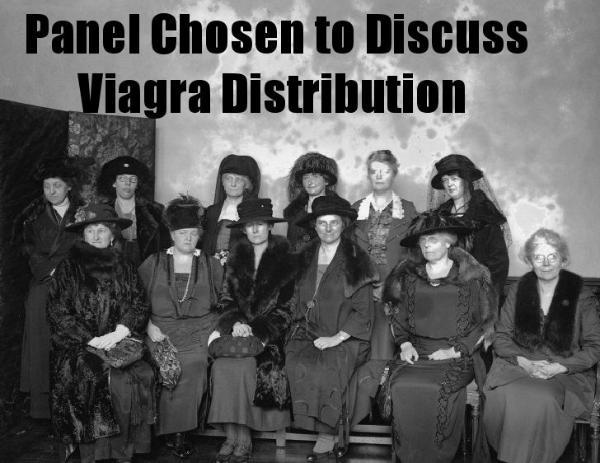
I’ve taken the pill since I was 16, originally and still for medical reasons though I appreciate the birth control aspect as well, and never once realized that it constitutes grounds for Viagra-popping pundits and moralizing college students to make pronouncements on my sexual habits. The more you know!
ETA: Adam Serwer wrote the following in a piece today titled Dear Rush Limbaugh: Birth Control Doesn’t Work Like Viagra:
The “subsidizing-your-sex-life” argument Limbaugh is making is related to, but nevertheless distinct from the religious objection to birth control. The US Conference of Catholic Bishops has opposed even allowing insurance companies to foot the bill for contraception for employees of Catholic institutions. However, it has no objection in principle to prescription drug coverage that includes Viagra. Neither, one assumes, does Rush Limbaugh. So if he wants to contend that covering birth control is akin to paying women for sex, let’s hear him explain why men who want their insurance to cover their erectile dysfunction pills are not “sluts” or “prostitutes.”