Skip to content

More Savage loving

More Savage loving published on No Comments on More Savage loving

Conversation continues about interpretation of Dan Savage’s sexual ethics.  Savage himself responds to Lindsay Beyerstein thusly:

Terry and I wouldn’t describe ourselves as monogamous-apart-from-an-occassional because we wouldn’t—couldn’t—feel comfortable using the word “monogamous” in reference to ourselves, not even monogamous-with-an-asterisks, because technically we’re, you know, not. But we kindasorta hate the term non-monogamous because when a gay couple describes themselves as non-monogamous people—gay and straight—assume a degree of promiscuousness that 1. we wouldn’t be comfortable engaging in and 2. we’re not actually engaging in. People don’t make the same assumption about non-monogamous straight couples because it’s generally more difficult for straight people to get laid. That’s why we usually describe our loving, bill-paying, childrearing life partnership as “monogamish.” Mostly monogamous but stuff happens. Some other stuff. Sometimes. Not all the times. It’s a term that I’d like to popularize. Our monogamish relationship—and I suspect that we’re not the only monogamish couple out there—has allowed us to integrate “sexual fulfillment with the other good things in life” quite nicely, thanks.

On Big Think, Dueholm complains that Savage doesn’t hold up monogamy as an ideal.  He’s right– Savage doesn’t, because he clearly doesn’t think it is ideal.  He doesn’t say it’s something for which we all should strive, but if we fail it’s understandable.  He says that it isn’t necessarily something we should all strive for, period.  We should strive for what we want, and not everybody wants monogamy.

The problem with “Jesus chicken”

The problem with “Jesus chicken” published on No Comments on The problem with “Jesus chicken”

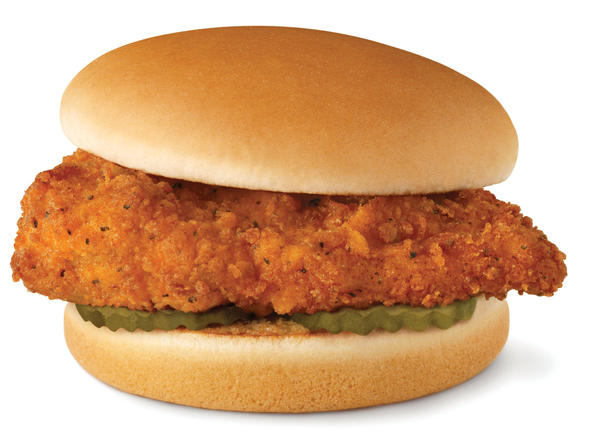
Those familiar with the Chik-Fil-A restaurant chain have known for quite a long time that the ownership is explicitly conservative Christian, which hasn’t meant much for people who like to eat there except that they must remember it’s closed on Sundays.  But recently it has come out (pardon the expression) that the company also contributes significantly to anti-gay causes.  The New York Times says:

Nicknamed “Jesus chicken” by jaded secular fans and embraced by Evangelical Christians, Chick-fil-A is among only a handful of large American companies with conservative religion built into its corporate ethos. But recently its ethos has run smack into the gay rights movement. A Pennsylvania outlet’s sponsorship of a February marriage seminar by one of that state’s most outspoken groups against homosexuality lit up gay blogs around the country. Students at some universities have also begun trying to get the chain removed from campuses. . . Over the years, the company’s operators, its WinShape Foundation and the Cathy family have given millions of dollars to a variety of causes and programs, including scholarships that require a pledge to follow Christian values, a string of Christian-based foster homes and groups working to defeat same-sex marriage initiatives.

Hence a certain amount of outcry from gay rights groups.  Change.org has created a petition asking Chik-Fil-A to stop funding anti-gay groups such as Focus on the Family which has so far received over 25,000 signatures, and many individual gay rights supporters have decided not to patronize the restaurant chain any longer.  Alvin McEwen writes at Pam’s House Blend that “lgbts also have a right to decide where NOT to spend our money. Furthermore we and our allies have a right to make a stink in regards to a company who wants us to buy its product, but not afford us respect.”

In other words, a boycott. It’s a time-honored concept– a way for people to express their disagreement with the ethics of a company by refusing to do business with it.  Otherwise known as “voting with your wallet.”  The idea is that financial support for an institution enables it and therefore can be construed as an endorsement of its policies, therefore revoking such support while saying “Hey everybody!  I’m revoking my support!” means that you’ve both ceased enabling that institution and attempted to make others aware of your reasons and encourage them to do the same.  It’s a legal and peaceful way of making your views known.  Right?

Not to Michelle Malkin, apparently.  In these efforts the conservative columnist sees an “ugly war” waged by a “left wing mob”:

Progressive groups are gloating over Chick-fil-A’s public relations troubles exacerbated by the nation’s politicized paper of record. This is not because they care about winning hearts and minds over gay rights or marriage policy, but because their core objective is to marginalize political opponents and chill Christian philanthropy and activism. The fearsome “muscle flexing” isn’t being done by innocent job-creators selling chicken sandwiches and waffle fries. It’s being done by the hysterical bullies trying to drive them off of college grounds and out of their neighborhoods in the name of “human rights.”

Gosh, you’d think that people were crowding the streets screaming and trying to use the law to prevent Chik-Fil-A from erecting a new establishment purely out of objections to its ideology!  Oh wait, that’s what people did in reaction to the proposed so-called “Ground Zero Mosque.”  What’s happening in this case is an objection to ideology, yes, but not just that.  It’s an objection to political efforts on behalf of that ideology to oppose equal rights for a segment of the American population.  And that objection is not taking place through violent means or legal enforcement– it’s taking the form of voluntary boycotts, and student efforts to encourage their universities to stop using Chik-Fil-A as a vendor.  Essentially, they are asking universities to participate in the boycott as well.

During the protests in New York at Cordoba House, many of us were asking conservatives who opposed the Islamic community center why they oppose the property rights of the building’s owners.  Now as gay rights advocates are boycotting Chik-Fil-A, I would ask Michelle Malkin why she doesn’t support the right of individuals to do business with whom they please.  It’s one thing to say that while boycotts in general are fine, this one in particular is misguided and inappropriate because of x, y, and z.  Then we could have a discussion on the merits of x, y, and z and would probably still disagree, but the basic understanding that everyone has a right to speak their mind both verbally and with their wallets would be there.

But that’s not what she wants to do.  The objections Malkin is making could be applied just as easily to any boycott by conservatives of liberal businesses.  The next time an organization like the American Family Association declares that it will boycott a automobile manufacturer or food producer for so much as advertising in a gay-friendly way, I wonder if she will call them “hysterical bullies,” or instead support them in speaking out against the fearsome left wing mob of…people who are okay with the idea that there are gays who want to do things like drive cars and eat soup.

Trying to decide who do business with can be tricky for people who care about the political involvement of companies and corporations (and trust, they will go on being involved in politics whether we care or not).  The most important part of minimizing that difficulty is freedom of expression.  We have to be able to find out, to research, to exchange ideas, to act, to let others know of our actions, and to hear about theirs.   The way to influence an entity whose primary concern is its profit margin is indisputably through our business choices– it’s the only power we as individuals have, which makes it sacred in a way.  It shouldn’t be treated lightly, and it should never be denied.

Some random musings on “forever”

Some random musings on “forever” published on No Comments on Some random musings on “forever”

When I lived in Denmark, a friend told me that no one there receives a prison sentence longer than fourteen years, regardless of their crime.  I’ve since learned that that’s not true, but the idea still baffles and appeals to me, and that has nothing to do with the specific number.  It’s because it suggests that a body of people have cumulatively decided that “forever” isn’t a punishment, that a life sentence is inherently no longer about the perpetrator but instead about desires for revenge on the part of the victim, the victim’s friends and family, and the greater society.  The thought of locking someone up and throwing away the key is immensely satisfying when they have done something to hurt you horribly.  I don’t mean to be at all flippant about this, but it just seems to me that people have a cognitive disconnect when it comes to thinking about “forever” or even “for the rest of your life,” and it gets in the way of our concepts of morality.  I don’t think that anyone should commit or be committed to something forever, or for the rest of their lives, because there is no way for them or us to properly conceive of what that really means.  Our understanding of time just doesn’t allow us to do so.

I’m relatively young, but not very young.  I realize that as you age, the years tend to run together and zip by in a way that would be literally incomprehensible to someone a decade or even a few years younger.  It doesn’t seem like you have changed much between five years ago and today, even though the individual years between when you were fifteen and sixteen or even twenty-five and twenty-six seemed instead like eras.  Still, a person can change dramatically in the span of a single year– any year.  Anyone who has watched their parents virtually turn into different people immediately after retirement, for example, is aware of this.  And yet from the inside, it seems like we’ve been basically the same person all along.  Naturally.  It would be very disconcerting if we didn’t, because the sense of “me being me” would be lost.  It’s common to hear someone say that she is no longer the person she used to be, but when saying that the person is almost always referring to a certain aspect of her character that has changed– not that she went through a complete change in terms of who she is. And yet that’s precisely what often happens.

I can’t help but think of the reactions I’ve heard to Jesse Bering’s theory about a cognitive constraint that prevents us from conceiving of the cessation of existence.  Basically, he argues, we believe in life after death because we are unable to conceive of being dead.  It’s impossible to do so, because there is no way to be conscious of the fact of being unconscious.  The immediate response is “Of course we can!  Do we not dream when we sleep?”  Sure we do, but that’s not real unconsciousness– real unconsciousness would be awareness of nothing, not even dreams.  Real unconsciousness isn’t sleep; it’s a black-out. You feel nothing during it, but you can sure feel terrible afterward.  Even if you’ve done it, you haven’t experienced it because experience during it is impossible.  In the same way, we think we can conceive of forever, or “for the rest of my life” or “for the rest of his/her life,” but we really can’t.  We can conceive of a really long time, because everyone has experienced a really long time, but that’s as close to “forever” as dreaming is to death.

It’s impossible to tell whether this conclusion is the product or the cause of many of my thoughts about justice and morality, but it is certainly connected either way.  It’s why I consider the death penalty to be more compassionate than a sentence to life in prison, for example.  Make no mistake; I oppose the death penalty– but I oppose life imprisonment more.  Given the chance to be Queen of the World for a day, I would abolish both but allow prisoners to opt for death at any point in their sentencing if they decided that was preferable.  But that would be a penalty they would have to carry out transparently and by themselves.  As horrible as the reasons for and means of committing suicide can be, I consider it a fundamental right, and perhaps if more people agreed with me on that, the means would become more humane for everyone involved.

I cringe when I hear people speak blithely-but-seriously about someone going to Hell, or even saying, as atheists often do, “I wish I believed in Hell so that he/she could burn in it.”   Do you really?  Do you honestly wish that you believed there is a place where people will be tortured forever?   You aspire, in other words, to be the worst sadist imaginable and regret that you’re not?  Because that’s what wishing eternal torture on someone entails.  If you were a sadist-in-practice in this life and tortured someone on your basement in the most merciless way for thirty years, behaving like…I don’t know, a Reaver from Firefly, it would be but a paper cut in comparison to an actual Hell.  Not even that, actually, because of course nothing can be compared to infinity.  How long would it take for your torture to become meaningless?  To become as much torture for the inflicter as for the inflictee?   A shorter time than I’d guess for people who like to invoke this lunatic notion, if they’ve even considered the idea in the first place.  And yet I’m not willing to convict them of sadism precisely because of that– I don’t think they have actually thought much about it.

At the opposite end of the spectrum (one would hope)– “I’ll love you forever.”  Really?  Are you sure about that?  Unconditional love is a nice-sounding idea, but loving someone who has decided after twenty years to become an ax murderering child rapist isn’t exactly a positive character attribute even if you manage to achieve it…and there’s no particular reason why you should, regardless of what Charles Manson’s many female admirers would say.  I would posit, actually, that most if not all of them admire him precisely because of the acts that caused him to be imprisoned in the first place.  If he were to be released and decided to take up a career as a janitor in Montana, much if not all of the attraction would probably be lost.  Again, a personality change over time.  There’s a good reason, I think, why such sentiments as “IIIIIIIII will always love yoooooooouuuuuu” are referred to as “sweet nothings.”  They sound sweet but literally mean nothing, if you’re doing it right.  There are a lot of stupid reasons to stop loving someone, certainly, but a heck of a lot of good reasons as well, and there’s no way to know which ones of either variety are going to crop up until they do.  Surely if you love someone for who they are, you should continue to love them for who they are.  Right?

What prompted these thoughts?  Something very mundane, actually, but still important– a discussion on whether people who have committed to a monogamous relationship are allowed to cheat, if something catastrophic happens which effectively kills any chance at romance.   Dan Savage’s answer is “yes,” if the cheating functions as a kind of pressure release valve which enables the sex-desiring partner to stick around.  But what got me thinking about “forever” was mainly the comment thread in which people discuss  what pledging your life to someone can and should mean.  As a Buddhist might point out, the only permanence is impermanence.  We’re all changing all of the time, and that’s a good thing.

There’s a thought I try to keep in mind.  I debated getting it tattooed, but it’s not exactly elegant wording– clumsy as hell, actually– so have decided against that.  Nevertheless, I try to live by it:
Life is short, so take it seriously.  But life is short, so don’t take it too seriously.

Equality worth working for

Equality worth working for published on 1 Comment on Equality worth working for

I have a dream that one day this nation will rise up and live out the true meaning of its creed: “We hold these truths to be self-evident: that all men are created equal.”

The true meaning, mind you– not merely what is reflected in the law, but in how we see each other.  How we evaluate each other’s worth, respectability, humanity.  Not by the color of each other’s skin, but the content of our characters.  That, in turn, will reveal our collective character.  

Dr. King’s foundation was unquestionably based in his faith.  Being a Baptist minister, that is naturally where he found his strength: “I have a dream that one day every valley shall be exalted, every hill and mountain shall be made low, the rough places will be made plain, and the crooked places will be made straight, and the glory of the Lord shall be revealed, and all flesh shall see it together.”  For him, the glory of the Lord could only be revealed when people of different colors could love and value each other as equals.  Jennifer Sanborn writes

You see, for me, the Rev. Dr. Martin Luther King, Jr. is first and foremost a Baptist minister, and a child of the same. I imagine it is because I am also the child of a Baptist pastor (and grandchild of two others) that I take particular pride in placing “the Reverend” at the start of his name. “Reverend” is a title that he earned with his education and his occupation, but also a title to which he was called, bringing unparalleled dignity and relevance to what it means to serve society as a religious leader.

I’m sure many people feel similarly, now as well as when MLK originally gave that iconic speech, which was essentially a sermon to America on the meaning of loving one’s fellow man.  As a non-believer I find no conflict in welcoming that sermon, and only a slight bit of discomfort in wondering how he would have responded if asked whether atheists would be included in the pluralistic group exhorted to “sing in the words of the old Negro spiritual, ‘Free at last! free at last! thank God Almighty, we are free at last!'”  I won’t remotely pretend, however, that there is any comparing the lot of atheists to that of black Americans in 1963.  That isn’t the point.  The point is, from whence is a committment to equality derived for those who don’t believe it was God-given?

It would be a fair bet to say that prejudice almost always precedes rationalization, whatever that rationalization is.  I’m pretty sure that human nature, perhaps ironically, includes both the justification for equality as well as the explanation for why humans are so prone to denying it.  And that is because of two salient facts:

1. Both science and religion have, at many points and many places in history, been used to rationalize bigotry. 
2. And yet, neither one has ever or will ever come up with a good reason to treat people unequally.  

If either of the above points seems at all contentious, remember that the numerous mentions of slavery in the Bible were used as a  primary reason to believe that black slavery was part of God’s divine order in the South, as well as the legacy of Spencerian “social Darwinism” which maintained that certain races were inherently inferior.  After all, if it weren’t so, why were they doing so poorly?  Why were they so easily conquered and used for the purposes of the more powerful white Europeans and Americans, if not because they are inherently inferior by evolution or design, whichever your preference? 

I’m still in the midst of my very long quest to discover what exactly human nature is, anyway, but the revelation of the above facts in my life can be attributed primarily to the cognitive psychologist Steven Pinker around 2004.  You see, after (and before) publishing a book called The Blank Slate which used powerful data from experimental psychology to demolish both the idea that there is no such thing as human nature as well as various myths about exactly what that nature is, Pinker and every other psychologist who uses evolution as a means to explain why humans behave as we do has been hounded by accusations that their work will be used to justify prejudice. 

And you know what? That’s exactly what has happened.  And it still happens.  People think that if they can show differences between the psychology of men and women, homosexuals and heterosexuals, blacks and whites, they will be able to show that treating any one or more of those groups as inherently less human is justified.  I really don’t want to get into all of the specific attempts to show that, because it would take away from the fundamental point that there’s nothing we can discover about a specific group of humans that would justify, for example, slavery.  Nothing that would justify physical or cultural genocide, rape, internment, disenfranchisement.  And that is because the humanity of humanity doesn’t need to be determined by conducting some elaborate experiment– it is literally standing right before us. 

I believe that tribalism is instinctive– that people find an element of safety in clinging tightly to those who are like themselves.  They will certainly base that in-group/out-group association on ideology, but it’s even easier to base it on traits that are evident at a glance.  Familiarity and similarity are the primary triggers for empathy, which means that strangers and people not like us are the “best” enemies.  And that is why, again and again throughout our history, we have been able to deny the humanity of certain groups of people in order to persecute them.  Not by knowing them, looking them in the face, having a conversation…because that would demonstrate that they’re more like us than we thought. 

I suppose that’s where I find my fundamental belief in equality– the abject failure, despite our best and most heart-felt efforts, to show that any class of humans really doesn’t deserve the label of “human.”  Martin Luther King Jr. managed to punch through that barrier of prejudice for so many people because he emphasized how much we have in common, how similar we are fundamentally, and how different life could be if we were just willing to encounter each other as fellow human beings, fairly and honestly.  That’s why his speech had and continues to have such a tremendous impact, and why we continue working to make his dreams come true.
Wow

Wow published on No Comments on Wow

 That’s all I can say at the moment– just, wow. 

From Casaubon’s Book, an excerpt from a post entitled “On Sentiment…And Against Sentimentality“:

 Sentiment officially has no place in agriculture, but I’ve met precious few smaller farmers who don’t have a spot of it. Indeed, I’ve come to suspect that a sentimental attachment to things is in fact a requirement for good small scale farming – and that equally, keeping sentiment in check is a requirement for the transition from “a few pet chickens” to “agriculture.”  Keeping the sentiment in check is obvious – if you chickens are pets, it doesn’t matter if they stop laying – you feed them and hope they start up again. If you make your living on your chickens, if they stop laying, your bottom line probably doesn’t allow for extended periods of feeding chickens that don’t provide any return. The sensible thing is to eat them or sell them and get some chickens that will lay – going bankrupt and seeing the farm turned into developments isn’t worth the trade offs, no matter how much you care for any given chicken . . .

Here I would make a distinction between “sentiment” which is simply “emotion” and “sentimentality” – which is cheap emotion, the substitution of a weak thing for something deeper. I don’t think sentimentality has any place in agriculture – in fact, I don’t think it has much place in life. Sentimentality prevents you from experiencing real sentiment.

Sentimentality in agriculture would be the refusal to put an animal that is suffering and has no future down, because you love it so much or don’t feel you can kill something. Sentimentality in agriculture is the dairy-drinking vegetarian who expresses hostitility to someone who dares to butcher a cute little calf – not realizing that that calf will grow up to be a large bull, that there is no retirement home for bulls, and that it is their milk habit that caused that calf to be born. These are sentimental emotions because they are cheap and weak – they don’t require knowledge or love for specific animals, or a real understanding of the animals and their needs. Sentimentality is the meat eater who doesn’t want to know anything about the animals their meat came from, because it is just too hard to think about – and thus enables factory agriculture because they don’t want to know. . .

Sentimentality creates the CAFO farm – the sentimentality that says we are too weak to bear the pain of knowing animals and watching them die. This is what turns our food into styrofoam packages and allows CAFO agriculture, where animals are carefully hidden from our view, and the relationship of our purchases carefully concealed. Sentimentality allows us to care about the extinction of the preferred charismatic megafauna of our choice, ideally something with big eyes, but that we see no connection between our purchases, our acts and the habitat destruction of the animals in question. Sentimentality enables us to care about the child Pakistani-flood victim on nightly tv enough to send some money – but not enough to try and reduce the number of climate-related natural disasters by giving up some of our priveleges. Sentimentality enables the patriotic fervor that allows us to not know how many Iraqi or Afghani civilians die in the interest of our national “greater goods.” Sentimentality is the emotion that emerges from the condition of not knowing – and it is what you have left in a society that conceals at every level real knowledge. It too is both cause and effect – it permits great evil, and it facilitates lack of knowledge of the real.Sentiment – love, anger, attachment, affection – real emotions – these derive from knowledge, and they can’t be faked. And when you know things, the choices you make get more complex. The realities you live in get harder and greyer. Sometimes love means you have to kill something. Sometimes one love means that another loved thing get sacrificed. Sometimes you have to go against your feelings. But the only way that never happens is when you substitute sentimentality for real feeling.

Some thoughts on “opting out.”

Some thoughts on “opting out.” published on No Comments on Some thoughts on “opting out.”

To return to a Michael Pollen note for a bit (sorry), I came across a section of Omnivore’s Dilemma today that devoted some discussion to “opting out.”  The context was home-schooling parents who also decide to buy their food from local farmers rather than from the grocery store, and Pollan described them as having “opted out once already.”  By this, Pollan meant that they had already once said “no” to a segment of American culture to which the vast majority of people say “yes.” 

I think most people underestimate the effect that opting out can have.  As much as I personally dislike being told that I’m opposed to some sort of behavior simply because it’s “different” when I think that it’s actually because I have a good reason for opposing it, it’s true that people often regard things with suspicion because they’re not normal. 

Having read Dan Savage’s sex advice column Savage Love for– gosh– fourteen years now, I would estimate that at least half of the letters submitted are from people concerned about whether their sexual proclivities are normal.  And his answer is always some variant on the same sentiment– who cares, so long as it makes you happy and it doesn’t hurt anyone?  But clearly people do care.  If they’re going to be strange and do things differently, it’s like they want permission to do it.  They want to know that their desires are legitimate, and they acknowledge that having to explain themselves to interested parties for deviating from the norm is taxing, which is why they want assurance that what they’re doing is in fact normal…even though it isn’t.

Yes, I did just compare having weird sexual kinks to home-schooling. 

Sure, the two things are different in a lot of ways, but I’d suggest that the relevant difference here is mainly about taste vs. ideology.  There’s not much you can do about taste– you can either hide it or be open about it, feel ashamed or feel confident, but it’s going to be there regardless.  With ideology, on the other hand, it’s about trying to be a different person than you would be if you were “normal.”  Some people are born into weird ideologies while others convert to them, but there’s often a moral dimension involved either way. 

Opting out is a conscious decision– it requires recognizing that one can choose not to do things the way most people are, and making that choice.  My understanding of homosexuality is that it definitely does not feel like a conscious choice, but deciding to be “out” is.  Even people who can look back and see their homosexuality written on the wall, so to speak, before they even realized it seem to have to go through a period of either going into the closet and/or (if they’re lucky enough to be in an accepting environment) make a deliberate choice to embrace that aspect of who they are and live as openly gay. 

Does having opted out in one dimension of your life make it easier to opt out in others?  Maybe.  At Skepticon 3 philosophy professor John Corvino gave a talk comparing coming out as gay to coming out as a skeptic/atheist, and it certainly sounded like the first experience made the second one a lot easier.   And it’s not necessarily a positive thing– in her book True Porn Clerk Stories, former video store clerk Ali Davis writers about certain customers who have reached the point of renting six or more porn movies per day, the people she’s no longer afraid to label “porn addicts,” having rejected society’s norms in other ways before reaching that point.  Sometimes opting out means taking control; sometimes it means giving up. 

Opting out has costs.  It might mean having fewer things to talk to your family about at Christmas.  It might mean being passed over for a job.  It might, as in the case of ethical choices, mean that people believe you are implicitly judging them for not joining them in your decision, and come to resent you for it.  It might mean that people conclude that you’re being different just for the sake of being different, and mock you because others are being different in a very similar way, as if it’s ever possibly to be truly unique.  It might, in some circumstances, mean that your rights are not acknowledged, or that life is made harder to live in some other way because most people simply do not have the same interests.  Can it suck?  Yes, very much.   It will always be mind-boggling to me to hear or read people say outright– in conversation, in letters to the editor, in debates– that they’re not concerned about the interests of minorities if their own aren’t affected.  Sure, let’s ban tattooing, ferret ownership, strip clubs, Islamic mosques, urban farmingI don’t want any part in any of those things, so screw people who do!

Back to the taste vs. ideology thing.  People who opt out for moral reasons may be offended by having their choices compared to opting out for matters of taste because it seems to negate the seriousness of their committment, but you can’t force others to take your interests as seriously as you do.  To them, it may as well be a matter of taste that you want to wear a burqa, raise your own chickens because you object to factory farming, or make sure your children receive their sex education from you and no one else.  What counts as being in the moral dimension for one person might well just look like a quirk or a hobby to someone else.   And conversely, what looks like a hobby or quirk for the person who wants to opt out to take part in it– getting tattoos, going to strip clubs, smoking marijuana– may have a moral dimension for others who are strongly opposed to it. 

Ultimately, I think that having a lot of people around who are openly “weird” in some way or another is a good thing, because it raises our level of cultural tolerance for weirdness.  The more homogeneous a society is, the more dangerous it seems (and probably is) to be different.  I have no particular desire to wear my hair in a mohawk, join a swinger’s club, or homeschool children, but am grateful to live in a culture where those things are tolerated if not warmly accepted.  It’s clear to me that the pursuit of happiness in a country can take as many different forms are there are members of its population, and it is therefore crucial that we protect each individual’s ability to pursue happiness to the maximal extent possible.  That’s clearly not to say that anything which makes a person happy must be allowed, but that the onus of proof for justifying standing in the way of such pursuit always rests on the person  who wants to do so– not one whose pursuit it is.  Diversity of species on a farm makes the organisms raised on it stronger and better defended from attacks by parasites.  Diversity of interests and lifestyles amongst the population of a society makes individuals in it stronger and better defended from attacks on their own happiness.

Dog botherers

Dog botherers published on No Comments on Dog botherers

Quoth Tucker Carlson on Tuesday:

“I’m Christian. I’ve made mistakes. I believe fervently in second chances. Michael Vick killed dogs in a heartless and cruel way. I think, personally, he should have been executed for that. The idea the president of the United States would be getting behind someone who murdered dogs is beyond the pale.”

So far, the most common reaction I’ve seen from people to this comment is that Carlson must be joking– as heinous as Vick’s acts were, we don’t usually execute people for killing people, let alone dogs.  Maybe some of us would prefer that the death penalty be applied more often, but no one would seriously suggest that it be applied for the killing of animals, however heartlessly and cruelly it is done.  Would they? NBC’s Al Roker tweeted yesterday that ‘Tucker Carlson’s bowtie has finally cut off oxygen to his brain. Only explanation for odious Michael Vick comment. Or maybe he’s an idiot.”  Others are wondering whether Carlson’s comments are truly Christian at all, and even suggesting that he is a racist.  At Black Voices, Dr. Boyce Watkins remarks

First of all, I think that most decent Christians would not believe that Tucker Carlson is a Christian. But then again, most of the original members of the KKK also considered themselves to be Christians, so perhaps Carlson’s delusional behavior actually makes sense. I’d be curious to see if Carlson believes that the hundreds of thousands of deer hunters and members of the National Rifle Association should also be executed for killing animals themselves. After all, killing an animal is the same no matter what, right?

Secondly, Carlson’s insinuation that the life of this black man is worth less than that of a dog is a telling reminder of how the Right Wing is nothing more than a modern-day manifestation of those who’ve profited from slavery and the execution of black men for the past 400 years (they continue to profit from slavery within the prison system – the only place where the United States Constitution allows slavery to take place). If this were 1840, Tucker Carlson would surely be part of the lynch mob that would have dragged Michael Vick out of jail in the middle of the night and murdered him in front of his family. So, as much as ‘Tucker the Christian’ might want to deny this, he is a direct descendant of those who’ve been responsible for the Black American Holocaust that we have yet to fully understand in our country.

Wow. Was Carlson really saying that the life of a black man is worth less than that of a dog?  There’s really no way to tell unless he elaborates further.  It’s possible that Michael Vick’s race is relevant, and also possible that it isn’t.  It could be that Carlson would have said the same thing had Vick been white, and my suspicion is that he would have.  My guess is actually that Carlson wouldn’t have said anything on the subject at all, had President Obama not called Philadelphia Eagles owner Jeffrey Lurie to praise the team for giving Vick another chance.  Call me a cynic, but I think what this was really about was Carlson seeing an opportunity to criticize the president for being soft on crime.  Just as the ACLU routinely comes under fire for protecting the rights of people who say the most heinous things and perform the most disgusting acts, Carlson saw the chance to claim that the president was “getting behind someone who murdered dogs” because Obama felt that Vick had paid his debt to society after serving nineteen months in prison and should be given another shot.  Whether you agree with the president on that or not, it’s dishonest to interpret such a position as an endorsement of the acts which caused Vick to be arrested and imprisoned in the first place. 

And what to make of Carlson prefacing his remarks by mentioning his Christianity?  It seems a little odd to start out by noting that you’re a Christian and you believe in second chances, and then finish by effectively saying “…but not for this guy.”  Execution is, for all intents and purposes, the elimination of any second chance.  Not only does Carlson apparently disapprove of the president’s policy of forgiveness, but he has come down firmly against making any effort to turn the other cheek.  It’s not hard to see why that would lead Watkins to conclude that “most decent Christians” would not count Carlson among their ranks.  I wouldn’t say that the Bible articulates a coherent theory of animal rights, but the fact that it includes stories of Jesus giving people fish to eat and casting demons into pigs who were then driven off a cliff leads me to at least conclude that he didn’t regard animals as equal to humans. 

Nevertheless, stories of animals being mistreated– dogs in particular– do spark a particular kind of furor in people.  People who own dogs commonly regard them as members of the family, but definitely as more analogous to children than adults.   A dog-owner himself, journalist Radley Balko pays particular attention to cases of “puppycide” when describing incidents of police malfeasance, such as when a video of a Missouri drug raid, in which a family’s pit bull and corgi were killed and injured respectively, went viral.  We have a long, complex history of interaction with canines, and it’s not at all unusual for people to react passionately at the thought of them being killed, much less tortured and killed gratuitously.  That explains why so many were angry at Michael Vick when it was first discovered that he was involved in dog-fighting, but not why such cases occasionally draw more attention than those involving crimes against humans.

The answer, I think, lies in our conceptions of moral responsibility.  We grant to dogs the capacity to be loyal, loving, dedicated, and even angry, jealous, and spiteful, but not evil.  When we find it necessary to put a dog to death, it is for the pragmatic reason of preventing it from attacking anyone again, or the compassionate motive to ease the suffering it experiences from injury or illness.  Not because it “deserves to die.”  Humans, on the other hand, can deserve to die.  They aren’t innocents.  I think that’s why stories of humans killing other humans don’t seem to provoke quite the same kind of outrage that we see when humans kill animals.  Not any animal, of course– as Watkins alludes, our compassion for animals is by no means consistent.  If dogs are regarded as half-people, pigs (for example) aren’t regarded as people at all.  Or maybe it would be better to say that they just aren’t regarded.  I don’t want to get too far off-topic by elaborating on why I think that is, but suffice to say that the gentle, panting, tail-wagging creatures we share our lives with tend to have a special place in our moral estimation.  When humans are killed it is generally by other humans, which makes obvious the fact that humans are capable of being both victims and perpetrators, and often the two categories aren’t necessarily so clear.  With dogs it’s always innocent victims, and harm to innocents is what makes tragedy so tragic. 

Again, I think Carlson’s comments were primarily a façade. I don’t think he is an idiot, rather that he went overboard in trying to make the president look bad.  But had he tempered his rhetoric a bit, he would have tapped into a common thread among average Americans, people who don’t see dog-killing as equivalent to person-killing but as a heinous act nevertheless, and find no conflict in their faith or moral reasoning in sharing Carlson’s opposition to Obama’s statements on the matter.  Me, I side with the president on this one.  But I can understand why others do not.

Who do you admire?

Who do you admire? published on 3 Comments on Who do you admire?

At The Daily Dish, Conor Friedersdorf contemplates the results of a recent Gallup poll asking Americans which men and women they most admire.  Barack Obama won out for men, whereas Hillary Clinton came out on top for women.  Friedersdorf thinks the fact that politicians make up the majority of people on both lists is “all about” name recognition, and I agree. He also says that “I’d never cite a living politician if asked who I admired most,” and I agree with that too.  Nor would I cite a religious leader who is heavily involved in politics, several of whom also figured highly in the ranks (Billy Graham, Pope Benedict XVI, the Dalai Lama).  In fact, the only people at the top who wouldn’t qualify for either of those two descriptions are Angelina Jolie, Oprah, and…Glenn Beck.  Dear god.

The poll asks “What man/woman have you heard or read about, living today in any part of the world, do you admire most?  And who is your second choice?”  I admit that if you called me on the phone and asked me this question impromptu, I would have some trouble coming up with my “best” answers.  I don’t keep a list of heroes in my head, because usually it’s not something important to consider unless you are asked for a Gallup poll, or, say, a job interview (why having a good answer to this question is an important quality in a receptionist, I’m not sure).  I couldn’t tell you my top five movies or bands, either.  It’s not because I’m apathetic or without preferences, just that ranking such things never really seemed that important.  But since I’m pooh-poohing the top answers given by the Americans polled, it seems like I should be able to come up with some I might actually give, at least for right now.  Such as…

Radley Balko:  Radley is a journalist.  To sum him up as a journalist, however, would be a little like summing up Norman Borlaug (someone who would absolutely be on my list, if he hadn’t died last year) as a farmer.  Radley’s work is decidedly political, but it is the kind of politics which any person with an ounce of compassion should praise, yet of which most are completely ignorant– seeking out and revealing the cases of people who have been oppressed by America’s justice system, whether by oversight or quite deliberately.   He’s written extensively about the harm caused by no-knock drug raids, prosecutorial cover-ups, asset forfeiture, the necessity of access to DNA testing for convicts, and general police malfeasance.  His work bring injustices to public attention– “My reporting helped get a guy off death row, helped win a new trial and acquittal for a 13-year-old murder suspect, and led to the firing of a corrupt medical examiner in Mississippi.”  His blog, as you can probably imagine, is frequently a depressing read.  But it’s a necessary one, and I admire him for doing this sometimes very dirty work.

Joel Salatin:  Joel is a farmer– but not a regular one.  To quote Wikipedia, he is
“a self-described ‘Christian-libertarian-environmentalist-capitalist-lunatic-Farmer'” who “produces high-quality ‘beyond organic’ meats, which are raised using environmentally responsible, ecologically beneficial, sustainable agriculture.”  To unpack that, it means that he doesn’t just farm without using pesticides or genetically modified animal foods, which is what “organic” usually implies.  Hence the ‘beyond organic’– the goal of Polyface Farms is to start with grass and build a progressive and decidedly non-industrial food chain off of it.  Cows, chickens, turkeys, rabbits, and pigs, all living off and contributing to the grass and each other’s…err…products.  No pollution production, no pesticide runoff, no tight confinement of animals in dark spaces eating food that makes them sick.  No docking of tails for depressed pigs.  No government subsidies, because the government doesn’t subsidize growing grass, or cows that were fed only grass or chickens that were fed only grass and the grubs of other animals that ate grass. Just a circular, self-perpetuating cycle of food production– something you’d think was the norm until you found out otherwise.  I admire that immensely. I also admire Michael Pollan for making sure the world has the opportunity to know who Salatin is.

Eugenie Scott:  Eugenie, who sometimes goes by “Genie,” is an anthropologist who heads up the NCSE (National Center for Science Education) and is, incidentally, one of the biggest fighters against creationism in public schools and promoters of evolution in America.  See Kitzmiller v. Dover.  Eugenie generally operates behind the scenes, but she is probably the foremost authority on the evolution/creationism controversy in the country.  And it’s not just about Dover– it’s about a country-wide ongoing tireless battle to make sure that what is taught in public school science classrooms is actually science, and she’s been contributing toward that effort for more than 20 years.  I find a lot to admire in that kind of dedication. I also admire Lauri Lebo for writing about the Dover trial in a way that could make everyone understand it and feel like they know everyone involved in it, because that’s absolutely necessary if people are expected to care. 

Carol Tavris:  Carol is a social psychologist who studies human bias.  She is co-author of a very important book entitled Mistakes Were Made (But Not By Me): Why We Justify Foolish Beliefs, Bad Decisions, and Hurtful Acts, which is a lesson in intellectual humility that everyone– everyone— needs.  I could make a list of science-based books that have made my head spin with possibility…and will, at some point.  But reading this one, and hearing Carol talk about it in the interview below and this one, really punched through for me.   As often as people throw around the term “cognitive dissonance,” they don’t really seem to understand it.  It’s not the simple fact of holding contradictory views– it’s the discomfort that arises from realizing that your views are contradictory.  Intellectually honest people feel cognitive dissonance and seek to resolve it by changing their views.  Intellectually dishonest people either don’t feel it to begin with or they find a way to avoid the discomfort by rationalizing their views to make them seem consistent, which is what Mistakes Were Made is all about.  We’re all regularly intellectually dishonest– it’s the norm, not the aberration.  Bias is in our nature, and bias is, in my view, infinitely fascinating.  That willingness to brave that chasm of human folly and make it easier for the rest of us to do so as well is why I find Carol so admirable.

“Survival and reproduction are in fact most definitely amoral.”

“Survival and reproduction are in fact most definitely amoral.” published on 1 Comment on “Survival and reproduction are in fact most definitely amoral.”

This was a remark made in the breeder comment thread. An odd one, I thought.  It sounds sensical at first– surviving is something we all need to do individually, and reproducing is something we at least need to do as a species, so how can someone apply “right and wrong” to them?  But I think what the commenter was actually saying is that you can’t apply notions of right and wrong to the matter of how we survive and reproduce, which is definitely a more complex issue. 

Reading Michael Pollan’s books lately has made me hyper-aware of the extent to which eating is a moral matter, for example. Eating, the thing we have to do to survive.  We also have to breathe to survive, but generally speaking it’s hard to hurt someone else or the planet by breathing– we cause harm by preventing others from breathing.  But it seems weird to think that there’s a moral dimension to going to the grocery store, buying a package of ground beef, taking it home, and making chili or a taco salad or something.  After all, that’s just making a meal– you didn’t steal the beef, did you? 

But when you do what Pollan did and trace the “food chain” back to the original source (or, much easier, read about him doing it), things become murkier.  For example, how much am I morally responsible for the way the steer which provided that beef lived?  Is it my fault that he was slaughtered at just over a year old after standing in his own manure in a CAFO (concentrated animal feeding operation) for almost his entire life?  How much am I responsible for the way the corn on which he was fed was itself raised, government-subsidized and fed to him because it makes cattle fatten quickly even though it also makes them sick (being ruminants, “designed” to eat grass, not grains) and necessitates giving them antibiotics which in turn lowers the communal resistance of everyone to disease?  How much am I responsible for the pesticides that run off the fields of corn raised to feed this steer, and pollute the rivers from which people take their water?   None of these things are necessary to produce beef for me to eat, and of course there’s the obvious fact that it’s not necessary for me to eat beef in the first place.  It’s a luxury, really– that much can be seen in how costly it is, and not just in terms of the cash that came out of my wallet.  Which is, by the way, less than it otherwise would be thanks to those subsidies.  

It’s generally understood that if you contribute financially to an act, you are in part responsible for it, because you are encouraging it to happen– that is the entire basis for laws against possession of child pornography.   If nobody bought meat from animals raised on factory farms, factory farms would not exist.  Period.  We fool ourselves into thinking that our purchasing choices don’t matter, but if that’s the case– why boycott?  Why do people organize to express collective disapproval of the ethical practices of businesses by refusing to purchase goods or services from them, if they think it accomplishes nothing?

I think the view that we bear moral responsibility for our purchasing decisions, especially those regarding what we eat and drink, is so hard to accept mainly because it’s both difficult to learn exactly how we are affecting other people and the world by our choices, and the fact that it costs, both in time and money, to change the choices we make.  It’s a pragmatic objection– buying ethically is both more expensive to do and more difficult to know how to do, which causes people to conclude that anyone who is concerned with such must have a lot of free time and a lot of money.  Food ethics is an ivory tower enterprise.  But it doesn’t have to be that way, and it is that way in large part because the corporations that produce our food and the government which regulates that production collude to make it so. The industrialization of food deliberately creates a vast chasm between us and the actual origins of the food we eat, which encourages us to be ignorant about it and thereby not care.  So long as we’re fed, and the food is tasty and cheap. 

I’m not touching so much on the “meat vs. no meat” discussion here, because I think that’s a somewhat different issue.  Certainly that’s an ethical matter as well, but I think bringing the discussion of whether eating meat is inherently unethical into the general topic of how to eat ethically muddies things quite a bit.   There are more and less ethical ways to eat meat, and generally speaking they coincide with the more and less healthy ways to eat meat.  For example, I think that people who object to factory farming but aren’t vegetarians should be big fans of hunting, which often involves shooting a deer, putting it in the freezer, and eating from it for much of the winter.  That white-tailed deer has lived in the wild all of its life, eating the plants that Odocoileus virginianus traditionally eats as opposed to dining on corn and standing in its own feces, and later is killed by a hunter to provide a family with meat that is nutritionally superior to that of a CAFO steer.  And we have in this country a ton of deer, as anyone who habitually drives in the country and has to worry about accidentally hitting one can testify.   Of course not everyone can hunt for their food due to constraints on both geography and population, but it’s something that meat-eaters who are concerned about the interests of animals should enthusiastically endorse. 

And it bears mentioning that food has a powerful connection to tradition, to family, to our notions of what is normal.  Nobody wants to think that the dishes Mom prepared or even the brands with which they’ve grown up are in any way bad choices, much less immoral ones.  Those things are ingrained and sacred.  I think that’s actually a huge part of the automatic defensiveness that meat-eaters tend to experience when confronted with the idea of vegetarianism, even if the vegetarian in question isn’t remotely militant about it.  The assumption is that the vegetarian believes he/she is morally superior, that the omnivore who eats according to how he/she was raised is inferior.  But summing up someone’s entire moral worth according to what they eat isn’t exactly a rational way to evaluate things.  I feel compelled to Godwin things by mentioning the oft-repeated story that Hitler was a vegetarian….

…but I’m sure you’ve heard of that one.  In any case, I think it’s pretty clearly that eating is absolutely a moral issue.  Reproduction has already been partially covered in the last post, but I’ll try to cover that more later.