It's a really, really big "if."

 Who are you, and what’s your history re: religion and stuff?
We can’t tolerate intolerance. We can’t abide elevating those who spend their time trolling, and harassing, and alienating the very people who we’re in this fight to help. We have serious work to do and we need serious conversations about how to do that. I don’t have time to waste on people whose only interest seems to be provocation for provocation’s sake and not on making the lives of our fellow atheists better.
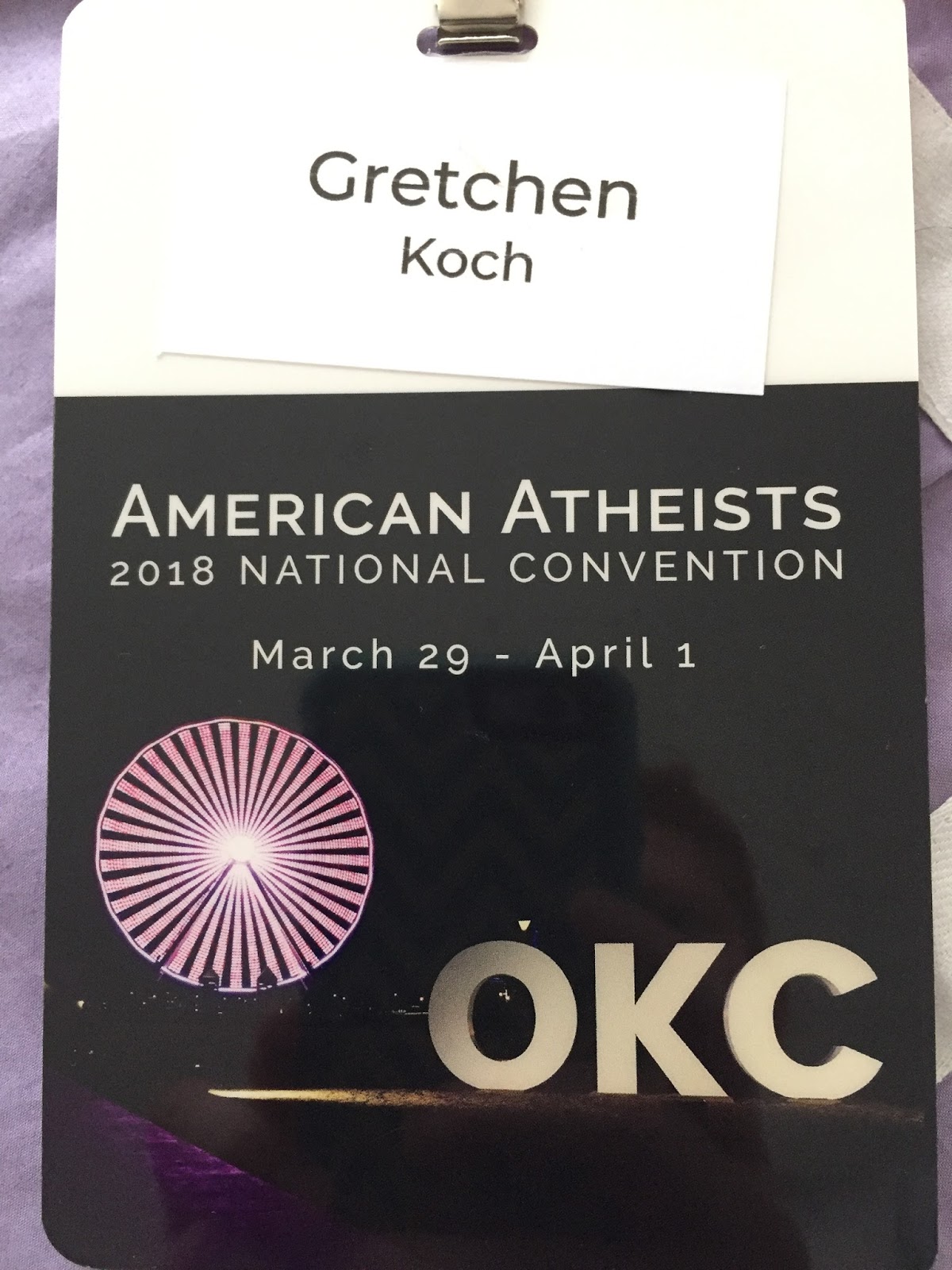
Our convention next year is March 29 to April 1 in Oklahoma City. Like every year, we’re going to have new people you’ve never heard from. We’re going to talk about tough subjects. But we’re going to do it without making people feel unsafe at our event. We’re going to have a great time celebrating our community and the people in it. And we’re going to do it while working to help people.
AA Con took place in the aftermath of multiple allegations of sexual harassment coming out against Lawrence Krauss, which you can read about here. Krauss is a well-known and highly-sought-after speaker at atheist conferences and other speaking engagements, and has continued to be even though rumors of his behavior have been circling for years prior to the Buzzfeed article. The allegations against him are only the most recent in atheism’s long history of big name male figures being accused of sexual misconduct often at conferences, which includes one of them suing an entire blog network along with specific people for publishing allegations against him.
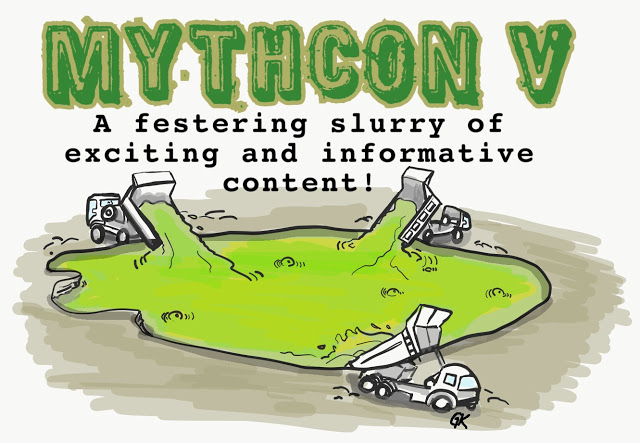
In the face of these revelations, individual atheists have had to divest themselves of hero worship and tribalism…or have not done so, and decided to instead just double-down on those things in defense of figure being accused. At the conference level, Mythcon basically picked up the pro-sexual-harasser/misogyny banner and ran with it, which is what prompted Silverman’s Facebook comment that I quoted above, and which brings us back full circle.
No. Atheism probably isn’t any more of a hotbed of sexual harassment than any other movement or group, actually. If sexual harassment is a disease, then people speaking up about it and holding each other accountable is the treatment. An organization or movement that is led largely by men (as atheism still is) that isn’t having a #metoo kind of reckoning probably isn’t that way because it has no disease, but because it hasn’t been diagnosed yet.
Righto. Well, the number I heard a few times was 850 attendees, which meant that they had to sell overflow tickets because that many people wouldn’t be able to fit into the Century Ballroom at the downtown Sheraton in Oklahoma City when it was time for the keynote conversation between David Silverman and Hugh Laurie.
Hugh Laurie? You mean House?
Yup. The keynote conversation turned out to be Hugh Laurie doing a bit of stand-up and then being basically interviewed by David Silverman about his atheism. It was enjoyable and actually reminded me of why it took me so long to get involved in movement atheism. Laurie’s British, as you know, and he described the culture shock in going from England to America in terms of rampant religiosity. He noted that Tony Blair is a Catholic, and described how that was actually a liability in getting elected in the UK as a “god botherer.” “God botherer” is a pretty common, benign term of ribbing in the UK for a devout Christian of any sort, perhaps a devout religious person of any sort.
It is not, I would note, Hugh Laurie’s personal insult of choice for Christians, something misunderstood by a preacher who apparently attended AA Con and wrote this charming review of the experience. Which you should read, because it’s kind of amazing. I’ll wait.
He said that there’s not really anything like American Atheists in the UK– not just because it’s the UK, but because religion isn’t nearly as pervasive in politics and social life, meaning that it’s not such a big deal to not participate in it, meaning that movement atheism isn’t really a “thing.” If nobody’s trying to pass laws requiring you to follow their religious rules and generally applying social pressure to be religious, then getting all gung-ho about not being religious can seem kind of pointless. When I was studying religion in grad school in the UK and then in Denmark, practically everyone around me was some form of non-religious, but the idea of joining an atheist movement seemed ridiculous and rather…petulant.
I absorbed this view so thoroughly that when I got back to the States, I brought it with me. If you read the post I wrote after attending Skepticon for the first time in 2010, shortly after moving back to the US, you’ll see that my main objection was that it was just too…..atheisty. I saw Skepticon as a big party for atheists, which it was in part, but I missed that if you live in the United States, particularly in a place like the South or the Midwest (like Missouri or Oklahoma), a big party for atheists that happens once a year might be the only time you actually feel comfortable being an atheist. That’s important.
And Skepticon isn’t, and AA Con isn’t, just a party for atheists. The focus on church and state issues, which now includes social justice issues, that comes with both conferences carries the premise that atheists should be engaged in areas where an injustice is being committed and in which religion plays a role. That encompasses myriad issues– LGBTQIA rights, Black Lives Matter and institutional racism generally, reproductive rights, sexual harassment and misogyny, immigration issues, sex workers’ rights, the drug war, and so on.
If people on the side of injustice, whatever it is, are claiming that God’s on their side, then there’s a natural place for atheists to fight for justice. In David Silverman’s talk entitled How the Mighty Get Back Up, he outlined how American Atheists would back initiatives in these areas, none of which are specifically about atheism, if the people involved in them self-identify as atheists. That’s a big deal. The community charity event that took place at the end of the conference on Sunday afternoon, packing up 30,000 meals for the hungry in Oklahoma City, is a big deal.
Well, says Brian Fields of Pennsylvania Nonbelievers (American Atheists affiliate), with whom I spent quite a bit of time talking. Brian’s one of the people I’ve known on Facebook for quite a while, and seemed like an excellent person, and proved to be equally so in person. He was excited about the meal-packing event because it was a chance to do activism/charity work at the conference, instead of just talking about it.
Who else did you meet?
I got to see Mandisa Lateefah Thomas (founder/director of Black Nonbelievers) again, and she gave a killer talk on Saturday called Who Says Community is Dead? reminding everyone how incredibly important community is, and how standards for appropriate behavior within that community are not only permissible but critical to avoid pushing out good people by holding onto the trolls. I got to meet a bunch of people from Wichita Oasis for *cough* the first time, and promised to attend a meetup soon. Josiah Mannion was on duty taking photos for the conference most of the time, but it was nice to see him again. Other people too, whose names are not occurring to me right now– apologies.
(Oh, also I was giving out freeze peaches. Everybody listed above got one. If you don’t have one, you should totally buy one. No pressure or anything though.)
That’s difficult to answer as there were many very good ones, so I’ll name three that stood out:
Yes.
I looked ahead in the program on Friday, and saw that on Saturday morning there would be a talk called Islamophobe delivered by Mohammed Alkhadra. Note: The title was what caught my attention; I’d never heard of Alkhandra before. I enjoyed myself at the comedy show the night before (Leighann Lord, Andy Wood, and Victor Harris), but made sure not to have too much fun so that I’d be equipped to listen to Alkhadra the next morning.
Alkhadra was born in the US but lived in Jordan most of his life, and founded the Jordanian Atheist Community when he deconverted. According to his profile on the American Atheists web site, “after giving a speech in the United Kingdom about Islam, Mohammed faced arrest and even death at the hands of the government and Islamic extremists, prompting him to move to the United States.” I am guessing this is that speech:
The talk he gave at AA Con was kind of an extended version of this speech, and the audience gave him a standing ovation at the end. I didn’t blame them. He described the horrors of criminalizing apostasy and blasphemy eloquently and passionately, and left no doubt concerning the value of free exchange of information (he credits learning about evolution from Richard Dawkins via Youtube for his deconversion).
So what made me cringe about his talk? Well, his conclusion was basically that if speaking out against the barbarism of an Islamic theocratic government is Islamophobia, then dammit he’s an Islamophobe and we all should be as well.
But he said this in Oklahoma, where voters approved a ballot measure to amend the state constitution to ban Sharia law from state courts in 2010. He said this while three white men from a Kansas militia are on trial for plotting to bomb a building housing Somali Muslim refugees and a mosque. He said this in a country whose president campaigned on, and then tried to make good on, a promise to ban Muslims from entering the country altogether.
I don’t actually care if “Islamophobia” is the term of choice for hatred of and discrimination against Muslims. But we need to have some term for it, because it isn’t collapsible into racism, although bigotry is messy (hence intersectionality) and the two frequently bleed into each other.
To be as clear as possible, I feel like I need to return to bullet points:
I understand why the audience at AA Con gave Alkhandra a standing ovation. I hope that whoever reads this can understand why I was conflicted throughout his talk.
I’m really glad I went. So much to chew on, so much to be inspired by, such friendly and excellent people. Thanks, AA Con.
Resources:
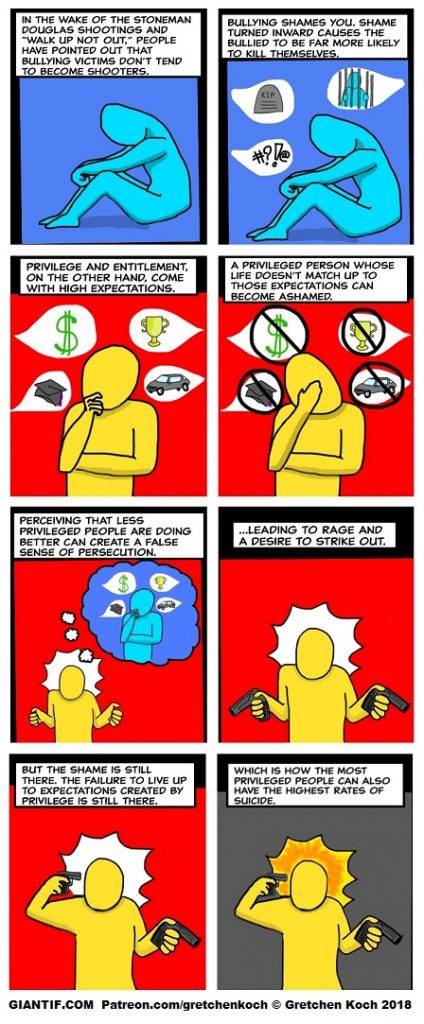
The male suicides: how social perfectionism kills
The Sexist, Racist Implications of the ‘Walk Up, Not Out’ Movement
My brush with suicide and the shame of not being a good enough man
The conservative persecution complex
‘When You’re Accustomed to Privilege, Equality Feels Like Oppression’
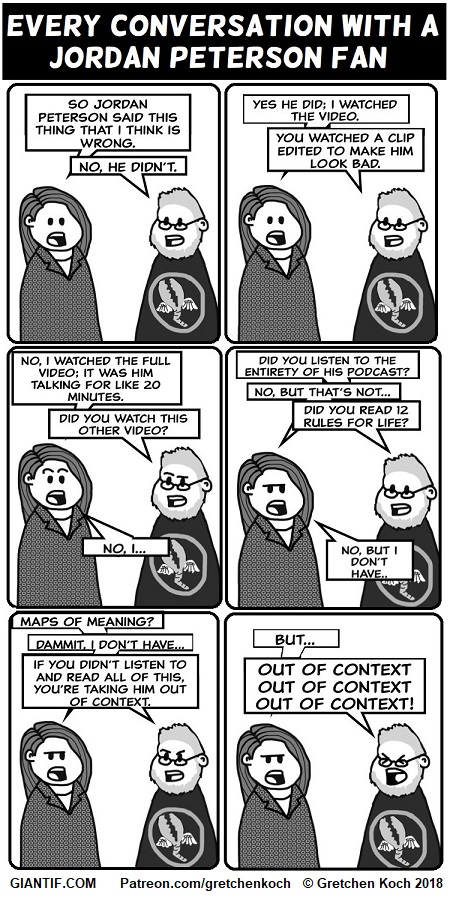
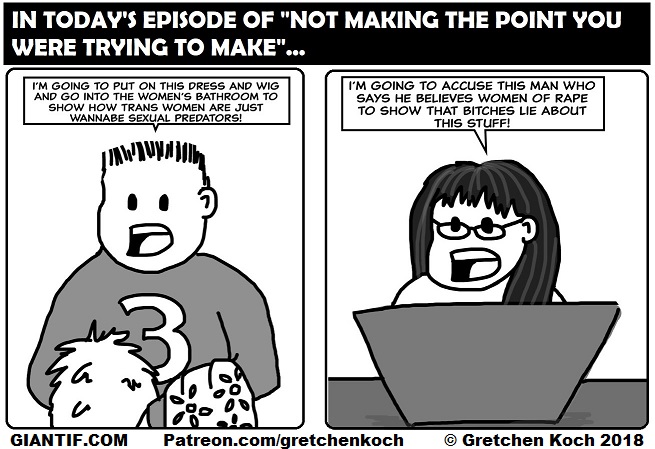
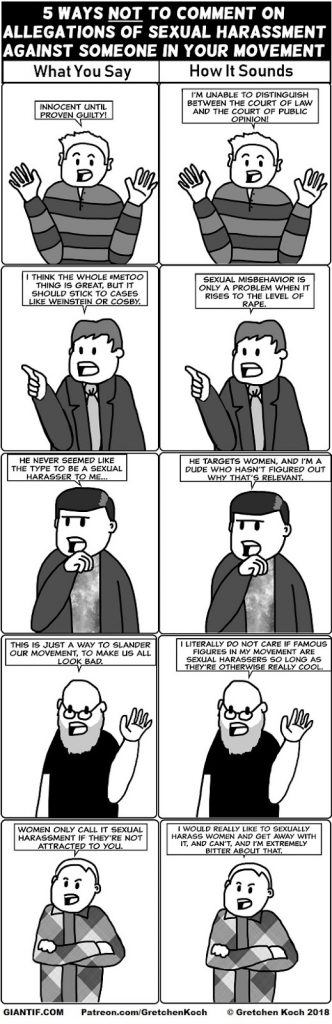
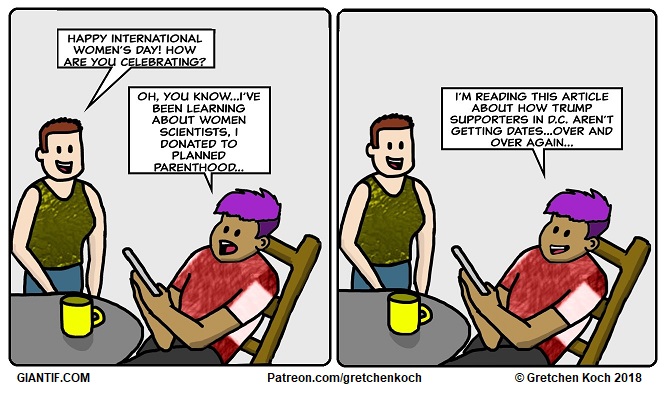
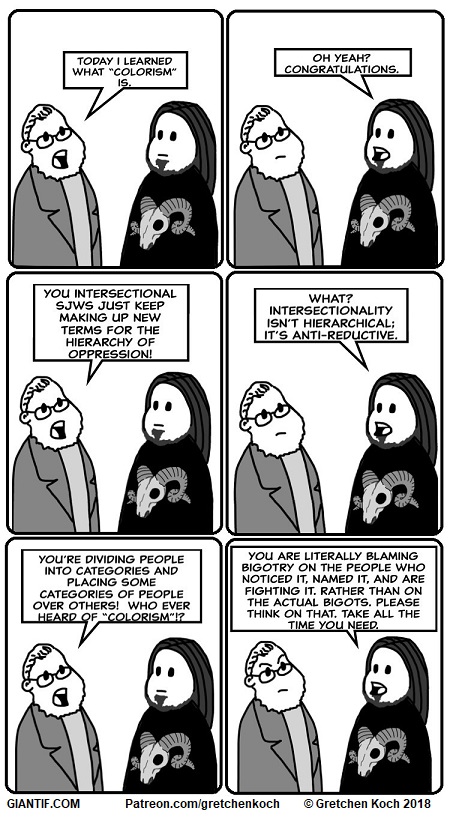
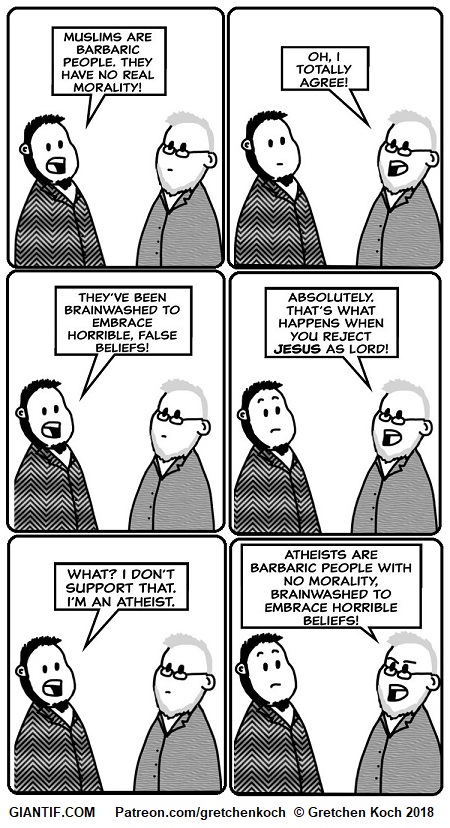
Someone who witnessed the following (paraphrased) exchange on Facebook commented that she couldn’t honestly tell sometimes whether people are genuinely confused about the difference between description and prescription, “is” versus “ought,” or are just trolling.
I have trouble fathoming the former, but the latter is more disturbing.
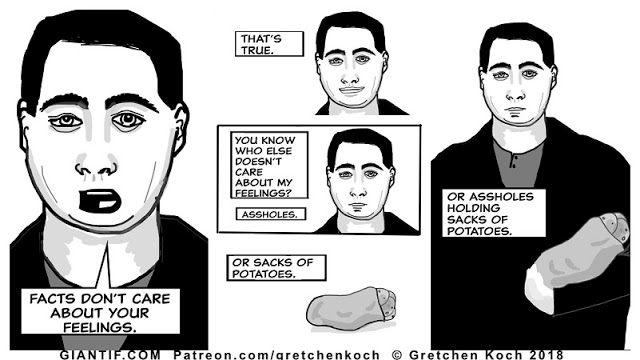
It’s trivially, and sometimes importantly, true that facts don’t care about your feelings. Facts don’t care about anything at all, because they are incapable of caring, but the point being made in this case is that facts are true regardless of how much you may not want them to be true. Neil deGrasse Tyson put it another way: “The great thing about science is that it’s true whether or not you believe in it.” And he was right– it is great.
However, there is also a sense in which “Facts don’t care about your feelings” can be self-justifying and bullying.
It’s self-justifying because telling yourself this when someone is reacting emotionally to your statements, especially angrily as a rejection of those statements, means you can use this to convince yourself that the statements are, indeed, facts. Why would someone get so pissed off about something that isn’t true? They just can’t handle the truth!
And it can be bullying in that “facts don’t care about your feelings” carries an unstated addendum “…and neither do I.” Having feelings about anything at all, and allowing them to affect your decision-making, is often denigrated as inherently irrational, even though we would be severely handicapped in our ability to make decisions without those feelings. Right now many conservatives in America are relying on this presumption alone– that people with strong feelings about something are incapable of thinking about it reasonably– to try and shut down the arguments that Parkland students in Florida are making for increased gun control.
They’re correct about one small part of that– people who are hysterical are often not good decision-makers. When we want to suggest that a person’s emotions invalidate any views they hold by rendering them irrational, we use words like “hysterical,” “apoplectic,” and especially “outraged” to indicate the presence of an emotional reaction so strong as to cause a person to lose their grip on reality. Which is, of course, just dishonest when in fact they are simply displeased or angry.
Anger can, in fact, be a powerful and productive motivator– Lindy West described feminism as “the collective manifestation of female anger” in a recent essay for the New York Times. Passionate people get things done– that’s why people who don’t want those things to get done are so dismissive and fearful of that passion.
And if “facts don’t care about your feelings” means “reality exists independently of your reaction to it,” then it is simply fallacious to insist that emotional people can’t make rational statements. It’s an ad hominem fallacy, in fact– attacking the person making the argument rather than the argument itself. If facts are impervious to feelings, then you could have all of the feelings or none of the feelings and that would be irrelevant to whether or not you also have the facts.
For these reasons, I went a little into the realm of the absurd with today’s cartoon. Also because “facts don’t care about your feelings” is just especially galling when it comes from the mouth of someone with a record of taking or leaving facts according to (irony?) how he feels about them.
Recently I was listening to the Embrace the Void podcast episode “Tolerate Me Bro!” about Popper’s paradox of tolerance. Hosts Aaron Rabi and GW were talking about how this paradox plays out in the context of platforming or deplatforming speakers, which is to say, the decisions that providers of platforms (talk show hosts, conference organizers, etc.) make about whose voices to amplify, and the reasons they have for doing so or refusing to do so.
Rabi made the point that if your intent as the owner of a platform is to allow for a productive debate, the paradox of tolerance suggests that you are justified in establishing a threshold of expertise and/or viewpoint acceptance for those who participate in the debate. So, for example, if your goal was to have a meaningful, good faith discussion about evolution, it would be reasonable for you to exclude creationists from the discussion because they would not be able to participate from a place of knowledge and honesty.
Rabi wasn’t talking about MythCon, and I’d like to make that clear so that it doesn’t look like I’m putting words in his mouth as I apply that “threshold of good faith” concept to a skepticism conference held in Milwaukee.
Last year’s MythCon was preceded by skeptics arguing in various places online about the fact that the organizers chose to invite Carl Benjamin, otherwise known as Sargon of Akkad, an alt-right Youtube rabble rouser known for his strident antifeminist views and flirtations with white supremacy. Many people encouraged the more respectable skeptic figures to drop out, which “Thinking Atheist” Seth Andrews did after significant grousing about the so-called “outrage brigade” raising the alarm about the conference.
Others, such as Matt Dillahunty and Thomas Smith, stayed in, relaying their displeasure about the experience afterward. Smith was especially condemning after having been faced with the prospect of “debating” someone who had once tweeted “I wouldn’t even rape you” at a sexual assault victim. When this fact was brought up on stage the audience cheered for Benjamin’s tweet, making it clear that if there was any faith to be found, it wasn’t the good kind.
Fast forward to last week, when the organizers announced the speaker list for the 2018 conference. Did they learn their lesson from last year? Not even slightly; rather it’s clear that they chose to double down. Their GoFundMe page for this year’s conference explains it thusly:
We lost $12k on #Mythcon 2017 and are raising money to support the cost of #Mythcon 2018. We cannot stop talking about, listening to and challenging ideas and issues that are important to us. We will not find progress talking only to those who agree with us. We need to explore beyond our comfort zone, ask difficult questions, criticize ideas and try to find common ground in order to work on conflict resolution.
Under this pretense we see that the schedule for 2018 features the following panels:
That’s kind of the point, though– the inclusion of qualified speakers lends a veneer of respectability and legitimacy to others. The people participating in good faith, by their inclusion and through no fault of their own, lend their halo effect to the trolls and charlatans.
There are important, nuanced debates to be had about intersectionality, social justice, the secular community, identity politics….all of it, but many of the people chosen to have a platform in these discussions are not qualified, and they are disqualified not only by their lack of expertise but by their rejection of the entire subject matter. There is no threshold of good faith at this conference, because participants are given a platform not based on their expertise and willingness to engage in productive discussion, but virtually based on the opposite– their willingness to stir the pot, to say inflammatory things that upset reasonable people and delight the sort of people who like to see reasonable people get upset.
MythCon has gone full troll, which wouldn’t be a big deal– skeptics interested in meaningful discussion can just look elsewhere; there are plenty of other opportunities– except that they’re still trying to maintain a facade of credibility in the process. That’s something they shouldn’t be allowed to do. We do not have to tolerate the intolerant. We do not have to lower the threshold of good faith for those who have no intention of or ability to practice it. We do not have to, and we should not.