- The Psychologist‘s April issue is dedicated to psychology, religion, and spirituality, and you don’t need a subscription to read articles such as “The Cognitive Science of Religion” by Justin Barrett and Emily Reed Burdett.
- Update from the New York Times on the gang rape in Cleveland, Texas– it’s worse than we thought. Much worse.
- The Village Voice skewers a study on sex trafficking.
- Transgendered people face more troubles at the DMV, this time in Utah.
- Private prisons seem like a bad idea for everyone but private prison owners.
- Austrian court fines man roughly $1,600 for yodeling while his Muslim neighbors are praying. Regardless of whether he was actually doing so to “disparage religious symbols” or not, I’m
hopefulthankful that such a thing could not happen in the U.S. - Pixar’s 2012 film Brave will be their first film with a female protagonist. As a Pixar junkie, I’m very curious…but could we leave the notion of “Disney princess” behind, please?
- The perils of the straight male gamer
Posts categoriezed as LGBT
Monday links
- Dan Savage reports that pro-gay marriage advocates are protesting outside the home of a florist who refused to provide flowers for a same-sex wedding: “Not cool.”
- Radley Balko points to a story of New Jersey police arresting five teenagers after a noise complaint…and then leaving them in the police van out in the freezing cold for fourteen hours without food, water, or access to a bathroom. I’m curious what will happen to the officers in question.
- Hehmant Mehta at Friendly Atheist wants to know how many Christian pastors actually believe in Hell, and whether they mention it at the funerals of people they believe are going there.
- Dr. X’s Free Associations posts a Youtube video from an 8th grader about her experiences being bullied that probably matches, word for word, what a lot of us experienced at that age. The difference is that Youtube wasn’t around when we were 13, so we couldn’t post such videos and have it get attention from school officials. Here’s hoping that in her case, they use the information wisely.
We’ve all got our own stuff

Again on Colorlines (I’m really happy to have discovered that site), Thoi Lu discusses black male feminism:
In light of the recent 11-year-old Latina who was reportedly gang raped by 18 black men in Cleveland and news of Chris Brown’s continuing meltdowns, Texas, a few black male writers have stepped up to the plate to explicitly discuss their journey toward becoming feminists. Byron Hurt of The Root wrote last last week on “Why I am a Male Feminist,” which prompted G.D. of PostBourgie to also write candidly about the topic two days later. Hurt admitted that observing the way his father would invoke fear in his mother during arguments by virtue of his greater size influenced his own relationships with women. He fell into feminism accidentally; Hurt interviewed for a position with the Mentors in Violence Prevention Project, not knowing that it was designed to use the status of athletes to make gender violence socially unacceptable. After hearing how women protected themselves from sexual assault and rape, his conception of feminism radically changed:
Like most guys, I had bought into the stereotype that all feminists were white, lesbian, unattractive male bashers who hated all men… Not only does feminism give woman a voice, but it also clears the way for men to free themselves from the stranglehold of traditional masculinity. When we hurt the women in our lives, we hurt ourselves, and we hurt our community, too.
While Hurt’s father’s presence was inescapable, G.D. wrote, “mine was imperceptible.” He had an absent father figure and was raised by “black women who were fantastically smarter and more competent than I was.” G.D. internalized how his mother always cautioned his twin sister to be responsible while in public, in a way he didn’t have to. Also, during a college summer, one of his female friends woke up in an empty dorm room in a bare bed and had to file a police report and get a rape kit, which was another situation he couldn’t fathom living through. At the least, however, he admits to his own ignorance:
I am routinely very, very dumb about this shit as a heterosexual dude — with all the tunnel vision and privilege that attends that location. The relationship those realities have to my blackness is a muddled one; sometimes they’re independent, sometimes they act in concert. But if growing up black and poor and male provided an unlikely bridge to anti-sexist thinking, so has feminism complicated the way I think about blackness and class.
Feminism as an ideology has a reputation for being a privilege of white women. They have been the ones who have generally been wealthier and more educated, the ones with the time and money to go off to university and take Women’s Studies courses and sit around discussing the patriarchy and learning to appreciate the value of a vagina. Black women were too busy working. They didn’t have time to do the kind of navel-gazing white women did in the 60’s (and still today) about the feminine mystique and the legitimacy of working outside the home, because they were already doing it. The issues they faced weren’t quite the same. So black women felt that their struggles were not being properly represented by a movement that purported to speak on behalf of Womankind. If in actuality it’s all about the interests of upper class white women, then we might as well just say so, but hopefully none of us actually want that to be the case. If we mean that, then being a feminist should be about representing the concerns of all women. If there is a single woman of any sort anywhere in the world who is being mistreated and her choices in life denied, we should all be feminists for her…shouldn’t we?
There are multiple dimensions to distribution of power in life, and it’s not surprising that one minority group should view one or more other minorities groups with oppressive eyes very similar to the ones with which they themselves are viewed. Hence, you get rich minorities looking down on the poor, white minorities looking down on minorities of different races, male minorities looking down on females, straight minorities looking down on non-straights, cisgender minorities looking down on transgenders, and various religious minorities looking down on each other and on non-believers. I’m sure there are more examples, but that’s a good representative sampling. I can see how if you’re anything but a white straight rich cisgender male, it would be easy to pick one or more minority groups to look down on order to get some sense of superiority. It’s not shocking at all that there are white feminist racists and homophobes, and blacks who are passionately concerned with racial equality but are themselves homophobic and/or misogynistic. Having your own struggle doesn’t automatically flip on some kind of empathy switch for other people’s struggles, as nice as that would be.
I don’t think I need to imply that men should speak for women in order to say that it’s an absolute pleasure to see/hear of them speaking up on our behalf. Often we’re not there to speak up for ourselves, and it has never made sense to me to think that it’s okay to make sexist/racist/homophobic/etc. comments just because someone who represents the group you’re talking about isn’t present. This post from from A Division By Zer0 makes the point that there are some men out there who think that rape is okay, provided you don’t call it “rape.” It’s sort of like murder, in that “murder” is the name for killing that is definitely wrong, and “rape” is the a name for a kind of sexual contact that is definitely wrong. But just as there are people who murder while considering it acceptable killing (for whatever reason), there are people who rape or would be willing to rape while considering it plain ol’ sex. The argument goes that by trivializing rape around such people, you are confirming in their minds that it is in fact trivial–giving them the impression that it’s normal to think the way they do, that there’s nothing wrong with it. The same is true of casual sexism, racism, classism, and homophobia. If the victims of these prejudices are the only ones to ever speak up in reaction to them, they will never be eliminated. That’s why we need feminist men, along with straight LGBT rights advocates, white racial equality advocates, and wealthy people who not only give to charity but don’t think of the poor as stupid, helpless, or otherwise inherently lesser.
I realize how very kumbaya this sounds, but we all have to stand up for all of us. There’s just no other way.
Follow-up: Jesus Chicken edition
I wrote before about how the conservative Christian-affiliated chicken chain Chik-Fil-A has received some very negative feedback about their contributions toward anti-gay political causes. Here’s the latest on that:
Focus St. Louis and the Clayton Chamber of Commerce said today that they are canceling a planned presentation by Dan Cathy, president and COO of Chick-fil-A, following complaints that Cathy and his company are involved with anti-gay organizations. . . The decision to cancel Cathy’s March 18 presentation here was made after PROMO, a statewide organization that advocates for lesbian, gay, bisexual and transgender equality, protested his appearance and asked Focus and the Chamber of Commerce to reconsider. Ellen Gale, the head of the chamber, said today that when the groups agreed to co-sponsor Cathy’s appearance, they had no idea he held controversial views. “We are a pro-diversity culture here and certainly don’t want to offend anyone,” Gale said. “We didn’t know anything about this when he was booked.”
Equality Matters replies (I paraphrase) “Damn skippy,” and lists extensive documentation of everything they dug up on Chik-Fil-A’s contributions and communications.
More Savage loving
Conversation continues about interpretation of Dan Savage’s sexual ethics. Savage himself responds to Lindsay Beyerstein thusly:
Terry and I wouldn’t describe ourselves as monogamous-apart-from-an-occassional because we wouldn’t—couldn’t—feel comfortable using the word “monogamous” in reference to ourselves, not even monogamous-with-an-asterisks, because technically we’re, you know, not. But we kindasorta hate the term non-monogamous because when a gay couple describes themselves as non-monogamous people—gay and straight—assume a degree of promiscuousness that 1. we wouldn’t be comfortable engaging in and 2. we’re not actually engaging in. People don’t make the same assumption about non-monogamous straight couples because it’s generally more difficult for straight people to get laid. That’s why we usually describe our loving, bill-paying, childrearing life partnership as “monogamish.” Mostly monogamous but stuff happens. Some other stuff. Sometimes. Not all the times. It’s a term that I’d like to popularize. Our monogamish relationship—and I suspect that we’re not the only monogamish couple out there—has allowed us to integrate “sexual fulfillment with the other good things in life” quite nicely, thanks.
On Big Think, Dueholm complains that Savage doesn’t hold up monogamy as an ideal. He’s right– Savage doesn’t, because he clearly doesn’t think it is ideal. He doesn’t say it’s something for which we all should strive, but if we fail it’s understandable. He says that it isn’t necessarily something we should all strive for, period. We should strive for what we want, and not everybody wants monogamy.
Dan Savage as sexual ethicist
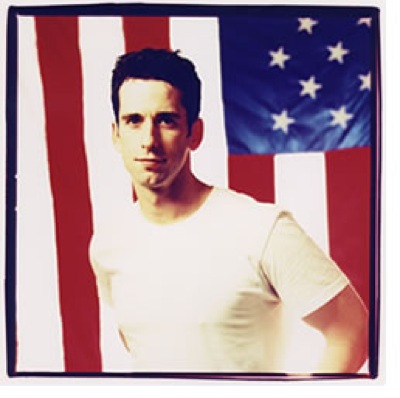 |
| As president? Well, maybe not…but we could do and have done a lot worse for that, too. |
Lutheran pastor Benjamin Dueholm wrote an interesting and thorough article on this subject for Washington Monthly. It’s definitely worth a read, though I disagree with some of his analysis. So does Amanda Marcotte, who ripped into the article to some extent for sexist/heteoronormative bias, and Lindsay Beyerstein, who points out that Savage isn’t nearly as opposed to monogamy as he is generally portrayed. It’s true; he isn’t– though he also doesn’t believe that everybody should be monogamous, or that people who cheat in a monogamous relationship are necessarily the scum of the earth and should never be forgiven.
Dueholm’s careful description of Savage’s ethos points out that in relationships he emphasizes honesty, autonomy, reciprocity, and willingness to give, which I would characterize as a mature respect for one’s partner. Just as different things make different people happy, different relationships can flourish under varied conditions and one size definitely doesn’t fit all. Savage’s willingness to acknowledge that and address individual relationships on their own terms is, I think, what has made and kept his column (and now podcast) so popular for so long. If we as a country were going to appoint a sexual ethics czar, we could do a lot worse.
Gendering the jokes
 |
| Judy Gold: one funny lesbian |
Psychologist Jesse Bering’s latest “Bering in Mind” column at Scientific American addresses lesbians in comedy– why are there so many? Or rather, why are there so many in comparison with straight female and gay male comics? Obviously the vast majority of comics who do stand-up, whom Bering refers to as “heavy-hitters in the world of comedy,” are straight males. Is there something that Louis CK, Chris Rock, Jerry Seinfeld, and Doug Stanhope have in common with Sandra Bernhard, Judy Gold, Wanda Sykes, and Margaret Cho that draws both groups to the clubs?
Bering challenges us to name a single gay male stand-up comic without consulting Google. I came up with Andy Dick, but stopped there. I know there are more, but on the spot couldn’t seem to muster any other names. Eddie Izzard definitely bends gender expectations with his transvestitism, but gay he is not. Bering suggests a reason for the disparity:
Still, one of the hottest findings to emerge from contemporary humor research is the fact that while both men and women say that they value a “good sense of humor” in potential partners, the two sexes mean vastly different things by this. Men prefer women who find them funny (“humor receptivity”), not funny women per se (“humor production”). Women display the opposite trend in their dating preferences. These were the basic findings reported in a 2006 issue of Evolution and Human Behavior by psychologist Eric Bressler and his colleagues. The authors interpret these data, and similar data, by drawing from psychologist Geoffrey Miller’s ideas about the evolution of humor. Miller has argued that ancestral males’ ability to produce entertaining humor demanded a set of heritable cognitive skills, including intelligence and creativity, and thus was a hard-to-fake signal of genetic quality. Due to the sexes’ differential investment in reproduction (just at a coital level alone, about 90 seconds versus 9 months), women would have evolved to be more receptive to signs of genetic quality than males. Men, meanwhile, would have been on the lookout for women who responded positively to their humor.
I’d heard of this theory before, and find it entirely plausible but also a bit depressing. Anecdotal evidence from my personal life shows that plenty of straight men are willing to at least claim that they are attracted to funny women– not just women “with a good sense of humor”– but it’s entirely possible that they did so just thinking that that’s what I wanted to hear. I definitely find myself attracted to men who are funny, and like to think that they feel the same sort of attraction. But maybe not. Or at least, maybe not to the same degree. Straight women certainly aren’t immune to feeling a rush of pleasure when someone appreciates their displays of intelligence and creativity in the form of humor; we just don’t seem to be nearly as keen to step up onto a stage in front of strangers to experience it. Julia Sweeney is a notable exception– when talking about her research into how the mind works in Letting Go of God, she says to the audience “I found that all of our brains are on drugs all of the time. We give ourselves hits: dopamine, oxytocin, serotonin, and vasopressin. The next time all of you laugh, I’ll get a hit of adrenaline through my veins, and if you don’t when I expect you to, I’ll get cortisol instead and I’ll feel anxious. I always thought I was a person in my family who escaped addictions, but now I realize that I am up here on this stage right now partly because I am an addict.”
Why does Sweeney seem to be often in the company of lesbians in that regard? Bering suggests that it has to do with hormones:
Researchers who study homosexuality have discovered that the brains of many lesbians were over-exposed to male hormones during prenatal development, influencing not only their adult sexual orientation, but also masculinizing other behavioral and cognitive traits in which there exist innate sex differences. This is not true of all lesbians, but it is especially true for those who exhibit male-typed profiles. So it is not implausible that some lesbians’ courtship strategies would largely mimic opposite-sex-typed patterns, including a differentiated capacity for humor production that attracts female attention. This would not be a conscious strategy, it must be emphasized, and indeed this is what many critics of evolutionary psychology repeatedly fail to realize. So, for heaven’s sake, don’t mistake this as me saying that lesbian comics go on stage just to score chicks. Gene replication is simply a mechanistic means to an end; if it works, it works. Many evolutionary psychologists, including Miller, believe that our minds are often just epiphenomenal interpreters.
The confusion Bering is addressing here has to do with proximate versus ultimate concerns, and it’s a common one for both the incredulous people who hear EP theories and don’t find them to line up with their own introspective reasons for doing what they do, and often evolutionary psychologists themselves. A proximate reason is what’s going on in your head– “I do comedy because I enjoy it. I love making people laugh.” An ultimate reason is what your genes want you to do– “I do comedy because it’ll get me laid, enabling me to further my lineage.” These reasons are not mutually exclusive, though that doesn’t mean that the explanation of ultimate concern is necessarily true. Our genes and hormones might not give a damn about whether we get up on stage to make people laugh or not, regardless of who we are. But it’s possible that they do, and that idea doesn’t need to be threatening. The conflict comes in when people differ as to what extent our minds are epiphenomenal interpreters– the means by which we manufacture after-the-fact motivations for our actions– as opposed to being directly causal.
For (a possible) example, an early comment on Bering’s article:
This seems so obviously cultural to me. It’s not considered ‘feminine’ or ‘lady-like’ to talk bluntly and sometimes vulgarly the way comedians must to elicit laughs. Lesbians have already been questioning and contradicting social norms of femininity, making it FAR easier for them to fit into the comedy domain.
I don’t want to claim that this person thinks that by appealing to social constructivism, he/she can reclaim a degree of agency stolen by evolutionary (read: genetic/hormonal) explanations. That might not be the case. But if he/she is, he/she is barking up the wrong tree– cultural forces don’t rescue free will any more than biological ones do. “My culture made me do it” is as much an abdication of responsibility as “My genes made me do it.” Aside from that, though, it seems like this explanation is begging the question– why is it not considered “feminine” or “lady-like” to speak in the vulgar ways often used by comics? Where does that come from? The goal posts have just been moved back a few yards. Eventually, we still have to answer the question of where these apparently very influential gender norms originated.
The psychology of comedy is endlessly fascinating to me. I know the common understanding is that analysis ruins a joke, but I’m prepared to murder a few jokes mercilessly in order to reach a better understanding of what makes people laugh, why it does, and– most interestingly to me– why the things that make people laugh so often become a moral issue. More on that later, hopefully. In the meantime, have a good weekend, and listen to whatever makes you laugh.
The saddest tattoo
Oh, I know there are sadder ones– Ugliest Tattoos is on my blogroll. But this one must be way up there:

I have a recommendation for his left arm, though—something from Leviticus 19. Lev 19:26 Eat not on the mountains, nor shall ye employ auguries, nor divine by inspection of birds. Lev 19:27 Ye shall not make a round cutting of the hair of your head, nor disfigure your beard. Lev 19:28 And ye shall not make cuttings in your body for a dead body, and ye shall not inscribe on yourselves any marks. I am the Lord your God. Lev 19:29 Thou shalt not profane thy daughter to prostitute her; so the land shall not go a whoring, and the land be filled with iniquity. Uh-oh. So even if this wrestler avoids the temptation to lie with a man, he’s damned by Leviticus 19:28. Heck, at this point he might as well go get funky and wild with a quadruped.
What gets me, though, is just the idea that someone would be so committed to disapproving of homosexuality that they’d see fit to indelibly mark that disapproval on their body. Normally when people get Bible versus tattooed on them (and plenty do, regardless of what Leviticus may say), it’s something inspiring. Something from Psalms, or perhaps John 3:16. Not this guy– he wants to be sure the world knows that he thinks an Old Testament verse condemning homosexuality from a chapter immediately preceding one that condemns bad haircuts is right on the money. Well okay, thanks for sharing. Maybe if he turns out to be gay himself, or just realizes that there is in fact nothing wrong with being gay, he can use this tattoo as an object lesson on how minds change. I’ll be optimistic and hope that he already does.
Iowa grandmother speaks in favor of gay marriage
I love this lady:
The problem with “Jesus chicken”
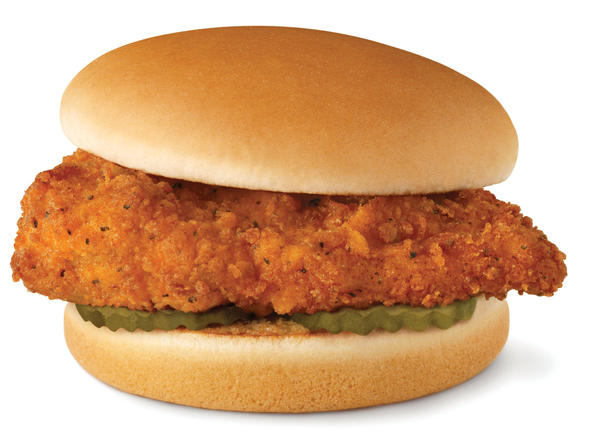
Those familiar with the Chik-Fil-A restaurant chain have known for quite a long time that the ownership is explicitly conservative Christian, which hasn’t meant much for people who like to eat there except that they must remember it’s closed on Sundays. But recently it has come out (pardon the expression) that the company also contributes significantly to anti-gay causes. The New York Times says:
Nicknamed “Jesus chicken” by jaded secular fans and embraced by Evangelical Christians, Chick-fil-A is among only a handful of large American companies with conservative religion built into its corporate ethos. But recently its ethos has run smack into the gay rights movement. A Pennsylvania outlet’s sponsorship of a February marriage seminar by one of that state’s most outspoken groups against homosexuality lit up gay blogs around the country. Students at some universities have also begun trying to get the chain removed from campuses. . . Over the years, the company’s operators, its WinShape Foundation and the Cathy family have given millions of dollars to a variety of causes and programs, including scholarships that require a pledge to follow Christian values, a string of Christian-based foster homes and groups working to defeat same-sex marriage initiatives.
Hence a certain amount of outcry from gay rights groups. Change.org has created a petition asking Chik-Fil-A to stop funding anti-gay groups such as Focus on the Family which has so far received over 25,000 signatures, and many individual gay rights supporters have decided not to patronize the restaurant chain any longer. Alvin McEwen writes at Pam’s House Blend that “lgbts also have a right to decide where NOT to spend our money. Furthermore we and our allies have a right to make a stink in regards to a company who wants us to buy its product, but not afford us respect.”
In other words, a boycott. It’s a time-honored concept– a way for people to express their disagreement with the ethics of a company by refusing to do business with it. Otherwise known as “voting with your wallet.” The idea is that financial support for an institution enables it and therefore can be construed as an endorsement of its policies, therefore revoking such support while saying “Hey everybody! I’m revoking my support!” means that you’ve both ceased enabling that institution and attempted to make others aware of your reasons and encourage them to do the same. It’s a legal and peaceful way of making your views known. Right?
Not to Michelle Malkin, apparently. In these efforts the conservative columnist sees an “ugly war” waged by a “left wing mob”:
Progressive groups are gloating over Chick-fil-A’s public relations troubles exacerbated by the nation’s politicized paper of record. This is not because they care about winning hearts and minds over gay rights or marriage policy, but because their core objective is to marginalize political opponents and chill Christian philanthropy and activism. The fearsome “muscle flexing” isn’t being done by innocent job-creators selling chicken sandwiches and waffle fries. It’s being done by the hysterical bullies trying to drive them off of college grounds and out of their neighborhoods in the name of “human rights.”
Gosh, you’d think that people were crowding the streets screaming and trying to use the law to prevent Chik-Fil-A from erecting a new establishment purely out of objections to its ideology! Oh wait, that’s what people did in reaction to the proposed so-called “Ground Zero Mosque.” What’s happening in this case is an objection to ideology, yes, but not just that. It’s an objection to political efforts on behalf of that ideology to oppose equal rights for a segment of the American population. And that objection is not taking place through violent means or legal enforcement– it’s taking the form of voluntary boycotts, and student efforts to encourage their universities to stop using Chik-Fil-A as a vendor. Essentially, they are asking universities to participate in the boycott as well.
During the protests in New York at Cordoba House, many of us were asking conservatives who opposed the Islamic community center why they oppose the property rights of the building’s owners. Now as gay rights advocates are boycotting Chik-Fil-A, I would ask Michelle Malkin why she doesn’t support the right of individuals to do business with whom they please. It’s one thing to say that while boycotts in general are fine, this one in particular is misguided and inappropriate because of x, y, and z. Then we could have a discussion on the merits of x, y, and z and would probably still disagree, but the basic understanding that everyone has a right to speak their mind both verbally and with their wallets would be there.
But that’s not what she wants to do. The objections Malkin is making could be applied just as easily to any boycott by conservatives of liberal businesses. The next time an organization like the American Family Association declares that it will boycott a automobile manufacturer or food producer for so much as advertising in a gay-friendly way, I wonder if she will call them “hysterical bullies,” or instead support them in speaking out against the fearsome left wing mob of…people who are okay with the idea that there are gays who want to do things like drive cars and eat soup.
Trying to decide who do business with can be tricky for people who care about the political involvement of companies and corporations (and trust, they will go on being involved in politics whether we care or not). The most important part of minimizing that difficulty is freedom of expression. We have to be able to find out, to research, to exchange ideas, to act, to let others know of our actions, and to hear about theirs. The way to influence an entity whose primary concern is its profit margin is indisputably through our business choices– it’s the only power we as individuals have, which makes it sacred in a way. It shouldn’t be treated lightly, and it should never be denied.