Skip to content

Too far from food

Too far from food published on No Comments on Too far from food
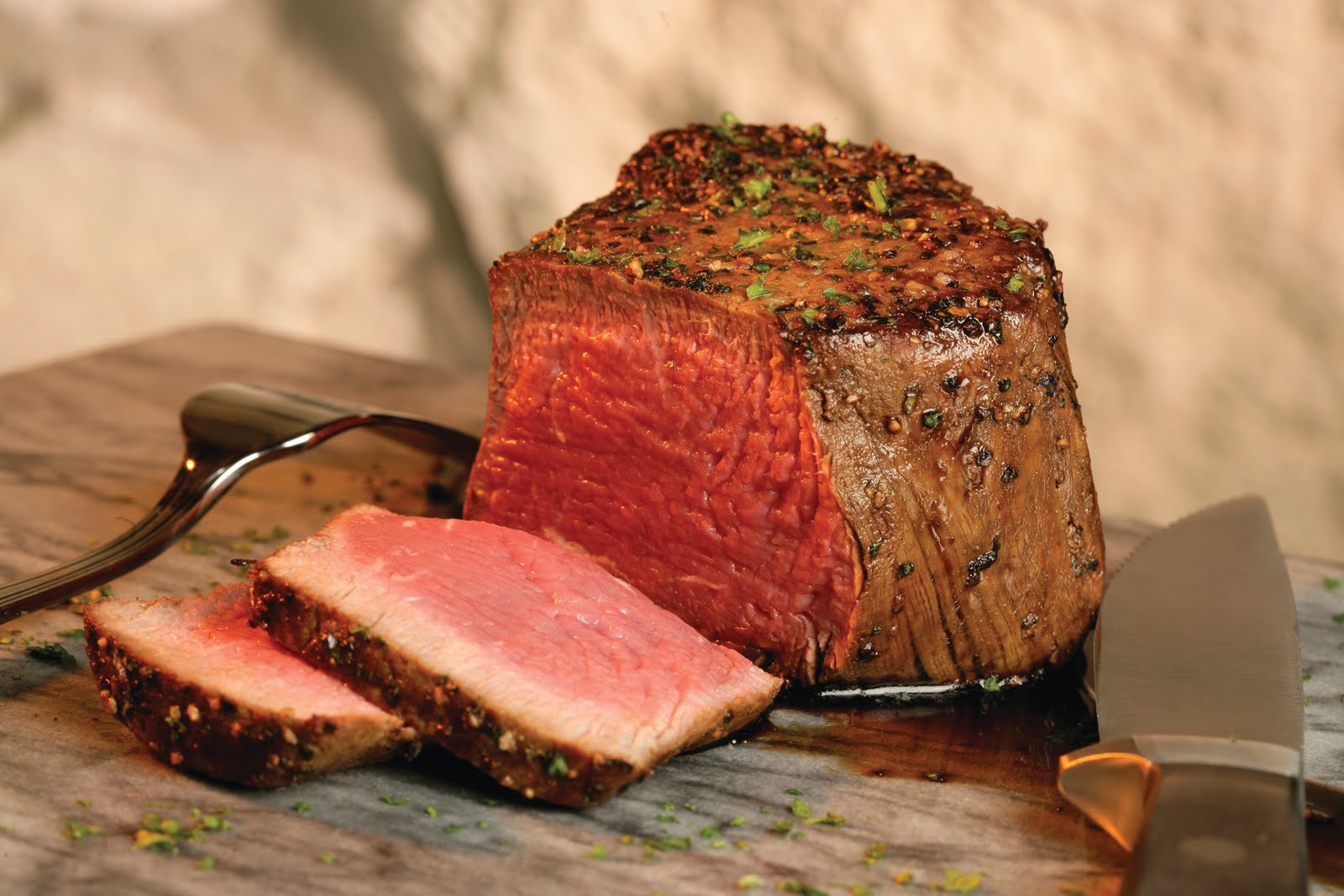
What my brain does when it hears the word “steak”

Beatrice Marovich has a fascinating essay at Religion Dispatches called “Eat, Pray, Kill: The Basic  Brutality of Eating,” in which she writes about the ethical quandaries of food in the context of secular morality and religious traditions. It’s fascinating to me both because of the sheer number of different perspectives she manages to cover while following the twisting topic of whether there is an ethical argument to be found, secular or religious, in favor of eating meat, but also because of the jarring awareness it provokes of the kind of cultural context in which a person could write such an essay. A cultural context, that is, of being far from food.

The kind of distance I’m talking about when using the word “far” is geographic– most Americans do not live anywhere near where the majority of the food they consume is produced. But it’s also informational– most Americans do not know very much about what’s in the food they consume, or how it was produced. That’s by necessity to some extent, but it’s also by design. The food we eat is artificially colored and flavored, decorated with pictures of quaint, casual, spacious farms from which it didn’t come, delivered to us out of season from distant lands, filled with chemicals we can’t pronounce, and in general modified within an inch of its non-life into appearing and tasting like something it isn’t. Just reading that previous sentence makes me feel like a curmudgeon, as if these facts are so ordinary and basic that they hardly bear mentioning. But Michael Pollan, who is mentioned in Marovich’s essay, spent more time than anything else in his books discussing the duplicity of large-scale food corporations and the enormous power they wield in perpetuating such, in cooperation with the government. They quite simply do not want us to know what’s in the food, or how it got there. We might demand that it be cleaned up or produced more ethically, or stop eating it altogether. And that all costs money. From the corporations’ perspective, it’s better for us just not to know.

It’s for this reason that the primary question of how to eat ethically continues to be, and is treated in Marovich’s essay as, the matter of eating meat or not. Ethics are about avoiding harm, right? And avoiding harm with regard to food means not killing animals and eating them, right? Weeeelll…..no. Actually it’s a great deal more complicated than that. There’s also the carbon footprint– how much damage is caused to the environment in order to produce this meal? And the blood footprint, which constitutes the sum total of suffering and death involved in getting that meal to you, is about far more than whether that meal is composed solely or mainly of dead animal. What about the animals whose existence was threatened or ended in the process of collecting the non-meat components of your dinner? What about the well-being of the workers who did the collecting and processing, packaging, shipping, and serving? The vast majority of us are food consumers but not producers– we don’t kill the meat we eat. So why should that be the only part of the process of consumption for which we hold ourselves morally responsible? Oh yes…because it’s the most obvious. It’s almost impossible to avoid, and for many of us avoiding it is the last thing we’d want because the presence of meat is either anathema or obligatory in a good meal. That doesn’t mean it’s the only consideration, or even necessarily the most important one.

These are things that are easy to forget when we’re far from food. But what is it like to be close to food?

When Louis recalls first becoming a bloodsucker in Interview With a Vampire, his memory is of having fled his own home in horror at the thought of needing to kill humans to survive, and he is discovered by his amused maker living off the blood of rats in the sewer. It would have been impossible for Louis to become a vegetarian, but you get the impression that he would have done so if he could. Gradually Louis is convinced that dining on humans instead is not only tastier and more dignified but entirely acceptable, because humans are petty, finite, lesser creatures. Most of us never have to encounter a similar shock as children at the thought that we are being asked to eat the flesh of the same creatures we anthropomorphize constantly in books, TV shows, movies, video games, etc. Or at least. any shock that does occur is mild considering that the meat of those animals doesn’t look like those animals, and sometimes doesn’t even look like meat. Almost nobody has to go out into the barn and and slaughter a pig for Sunday ham, or learn how to most efficiently slice a chicken’s throat, and the rarity of anyone doing such things anymore has gone mostly unnoticed. It has just been part of the distancing.

Being close to food seems to inspire ritual, and Marovich’s essay is mostly focused on that, having been inspired in large part by a presentation at Columbia University on religion’s general relationship to animals, which she in turn narrows into a discussion on meat. Food is a thing that is consumed into our bodies (which is kind of bizarre when you think about how rarely that happens otherwise– there’s medication, and that’s about it), there are concerns about purity and pollution, which of course is religiously relevant…goodness, could it be any more religiously relevant, without being sex? But ritual purity and hygienic purity are not quite the same thing, and neither are ritual pollution and actual pollution. A religious rule regarding the avoidance of eating some particular kind of food might be based on actual poisonous or otherwise unsafe properties, or it might be based on poisonous or unsafe properties that the food used to have when the rule was originally devised by doesn’t necessarily any longer, or it might be based on that food’s associative properties as unfit to introduce into the human body. Meat was necessary for our ancestors to eat, and they had to find a way to clearly and firmly articulate what kind of meat was acceptable, and how it must be slaughtered in prepared, in order to make it safe to eat both physically and psychologically. Hence, ritual.

Sustainable farmer Joel Salatin’s TED talk in 2009 was framed in very religious terms:

Salatin is a devout Christian and makes no attempt to hide it. When interviewed about slaughtering chickens for Michael Pollan’s book The Omnivore’s Dilemma, Salatin talks about how nobody on his farm slaughters everyday because it’s desensitizing, and claims that priests recognized this concern and spoke against the same people performing continuous slaughter for that reason. Salatin definitely makes the sustainable production of meat and produce a sacred mission, and speaks of it passionately as his calling, his attempt to do service to animals and the earth by acknowledging their interests and the continuous roles they serve for each other– cows and pigs eating grass, chickens following in the path of the livestock and eating the insects attracted to their waste, and contributing their own waste to the land which produces more grass to feed more livestock. It’s for this reason Salatin describes himself as a “grass farmer”– grass, he proposes, is the beginning of everything, the link that is missing in the current CAFO and factory farm production of chickens and cows who are raised solely or primarily on grains, growth hormones, and fat.

That’s not a model that requires a farmer of a particular faith, or really any faith at all, but it does introduce a notion of sacredness that I find very useful– a model of doing things that is very important for reasons that aren’t immediately obvious, for a deep-seated and satisfying purpose. That’s a form of ritual which is repeated not because it’s ritual, but because it remains relevant, remains sacred. A ritual created by someone close to food. We can’t all be anywhere near that close, but we can listen to those who are.

The blood footprint

The blood footprint published on 4 Comments on The blood footprint
More animal-friendly than a vegetarian? 

There are all sorts of ways in which people can alter their diets for ethical reasons, but the presumed reason that people become vegetarians out of ethical concern is that they don’t want to cause any animals to die in order to supply their meal. Jackson Landers at Zester Daily puts forth the counter-intuitive position that sometimes not eating meat can cause more suffering and death than eating it. In A Better Choice: Deer, he compares eating hunted venison to soy burgers:

Meat is not the only food that is the byproduct of animals suffering. Other foods have what I call a “blood footprint,” but the relationship is more subtle. It is possible for a vegetarian meal to require more suffering than a carnivorous meal. A thoughtful carnivore, especially if she is a hunter, can potentially eat with a smaller blood footprint than a vegetarian. Consider the typical blood footprint of that mainstay of a vegetarian diet, the soy burger. The meal itself contains no meat. But the production of soy and tofu on an industrial scale requires quite a lot of killing. Crop depredation by deer and other animals is a huge problem for most soy growers. The majority of states will issue depredation permits to farmers who are suffering crop damage, and as a result, deer are shot in high numbers in the name of protecting soy and corn crops. Some states require that the deer shot under these permits be left to rot, and forbid any meat from being taken from the animals. Crows, starlings, blackbirds and other birds are shot, trapped and poisoned by the millions every year in North America for the sole purpose of protecting crops. Millions of mice, voles and ground squirrels are trapped, poisoned or otherwise killed for the same purpose. All of the food harvested from these fields is technically vegetarian fodder, but how many lives were lost to produce that tofu burger? How much suffering was required? You won’t find anything on the label about that. If your purpose in ordering from the vegetarian menu was to dodge cruelty, your mission failed. True, if you compare a tofu burger to a grain-fed beef burger, the tofu burger comes out ahead. Corn-fed beef involves all of the sins required to grow its food, and then the cow is slaughtered to boot. But a wild venison burger is arguably a more ethical way of putting lunch on the table. A wild deer requires no killing until the moment of harvest to produce some 40 pounds of meat, even from a smallish animal. The deer lives free of cages, electric prods, hormones or antibiotics. No other animals are trapped, poisoned or shot to bring it to maturity. The blood footprint of the venison burger may be less than that of a tub of popcorn. One life, divided among many meals. The deer lives a good life, and then has one bad day.

Obviously this is not a complete argument for ethical vegetarians to resume/begin being omnivorous. For one thing it isn’t necessary that they consume soy, though this essay addresses the importance of considering the possible suffering caused to animals in the production of whatever food you do eat, because that too is part of your blood footprint even if no actual animal flesh is part of your diet. Not eating soy doesn’t get you off the hook. For another, while it might be possible for all current vegetarians to become deer hunters and swap soy for venison, that’s a) not a very realistic thing to imagine and b) as proliferate as deer are, it wouldn’t be possible for all of us who currently eat meat with a greater blood footprint than venison to switch to that as well. America eats too much meat, period, for us all to switch to venison even if we wanted to. And plenty of us don’t.

Still, this is an excellent reminder to differentiate between ethics and sentimentality. I wrote the following on this blog two years ago, as part of a general discussion on the morality of survival:

I’m not touching so much on the “meat vs. no meat” discussion here, because I think that’s a somewhat different issue. Certainly that’s an ethical matter as well, but I think bringing the discussion of whether eating meat is inherently unethical into the general topic of how to eat ethically muddies things quite a bit. There are more and less ethical ways to eat meat, and generally speaking they coincide with the more and less healthy ways to eat meat. For example, I think that people who object to factory farming but aren’t vegetarians should be big fans of hunting, which often involves shooting a deer, putting it in the freezer, and eating from it for much of the winter. That white-tailed deer has lived in the wild all of its life, eating the plants that Odocoileus virginianus traditionally eats as opposed to dining on corn and standing in its own feces, and later is killed by a hunter to provide a family with meat that is nutritionally superior to that of a CAFO steer. And we have in this country a ton of deer, as anyone who habitually drives in the country and has to worry about accidentally hitting one can testify. Of course not everyone can hunt for their food due to constraints on both geography and population, but it’s something that meat-eaters who are concerned about the interests of animals should enthusiastically endorse.  

There may be a cultural gulf between the type of people who hunt and fish and the people who shop Whole Foods for only the most humanely produced organic products, but there isn’t really an ethical one. At least, not nearly as much as one might think. And at least not regarding food.

The “E” word applied to food. No, it doesn’t stand for “educated.” Or “empathetic.”

The “E” word applied to food. No, it doesn’t stand for “educated.” Or “empathetic.” published on No Comments on The “E” word applied to food. No, it doesn’t stand for “educated.” Or “empathetic.”

Eric Schlosser lays down the law in the Washington Post:

At the American Farm Bureau Federation’s annual meeting this year, Bob Stallman, the group’s president, lashed out at “self-appointed food elitists” who are “hell-bent on misleading consumers.” His target was the growing movement that calls for sustainable farming practices and questions the basic tenets of large-scale industrial agriculture in America. The “elitist” epithet is a familiar line of attack. In the decade since my book “Fast Food Nation” was published, I’ve been called not only an elitist, but also a socialist, a communist and un-American. In 2009, the documentary “Food, Inc.,” directed by Robby Kenner, was described as “elitist foodie propaganda” by a prominent corporate lobbyist. Nutritionist Marion Nestle has been called a “food fascist,” while an attempt was recently made to cancel a university appearance by Michael Pollan, author of “The Omnivore’s Dilemma,” who was accused of being an “anti-agricultural” elitist by a wealthy donor.

This name-calling is a form of misdirection, an attempt to evade a serious debate about U.S. agricultural policies. And it gets the elitism charge precisely backward. America’s current system of food production — overly centralized and industrialized, overly controlled by a handful of companies, overly reliant on monocultures, pesticides, chemical fertilizers, chemical additives, genetically modified organisms, factory farms, government subsidies and fossil fuels — is profoundly undemocratic. It is one more sign of how the few now rule the many. And it’s inflicting tremendous harm on American farmers, workers and consumers. During the past 40 years, our food system has changed more than in the previous 40,000 years. Genetically modified corn and soybeans, cloned animals, McNuggets — none of these technological marvels existed in 1970. The concentrated economic power now prevalent in U.S. agriculture didn’t exist, either. For example, in 1970 the four largest meatpacking companies slaughtered about 21 percent of America’s cattle; today the four largest companies slaughter about 85 percent. The beef industry is more concentrated now than it was in 1906, when Upton Sinclair published “The Jungle” and criticized the unchecked power of the “Beef Trust.” The markets for pork, poultry, grain, farm chemicals and seeds have also become highly concentrated. America’s ranchers and farmers are suffering from this lack of competition for their goods. In 1970, farmers received about 32 cents for every consumer dollar spent on food; today they get about 16 cents. The average farm household now earns about 87 percent of its income from non-farm sources. While small farmers and their families have been forced to take second jobs just to stay on their land, wealthy farmers have received substantial help from the federal government. Between 1995 and 2009, about $250 billion in federal subsidies was given directly to American farmers — and about three-quarters of that money was given to the wealthiest 10 percent. Those are the farmers whom the Farm Bureau represents, the ones attacking “big government” and calling the sustainability movement elitist.

From Joel Salatin’s article in Flavor magazine last year, Rebel with a Cause: Foodie Elitism:

This winter, the Front Range Permaculture Institute invited me to come to Fort Collins, Colorado, and give a speech at a fundraising event. They filled a huge community theater with people, and ticket sales were enough to pay my travel and honorarium—with enough left over to buy 40 CSA shares for poor families in their community. What a wonderfully empowering local effort. (They didn’t wait for a government program.) Perhaps nothing would reduce perceptions of elitism faster than foodies buying CSA shares for impoverished families.  At the risk of sounding uncharitable, I think we need to quit being victims and bring about change ourselves. Don’t complain about being unable to afford high-quality local food when your grocery cart is full of beer, cigarettes, and People magazine. Most people are more connected to the celebrities in People than the food that will become flesh of their flesh and bone of their bones at the next meal. . .  We can all do better. If we can find money for movies, ski trips, and recreational cruises, surely we can find the money to purchase integrity food. The fact is that most of us scrounge together enough pennies to fund the passion of our hearts. If we would cultivate a passion for food like the one we’ve cultivated for clothes, cars, and entertainment, perhaps we would ultimately live healthier, happier lives.  To suggest that advocating for such a change makes me an elitist is to disparage positive decision making and behavior. Indeed, if that’s elitism, I want it. The victim mentality our culture encourages actually induces guilt among people making progress. That’s crazy. We should applaud positive behavior and encourage others to follow suit, not demonize and discourage it. Would it be better to applaud people who buy amalgamated, reconstituted, fumigated, irradiated, genetically modified industrial garbage?  The charge of elitism is both unfair and silly. We foodies are cultural change agents, positive innovators, integrity seekers. So hold your head high and don’t apologize for making noble decisions.

Tuesday links

Tuesday links published on No Comments on Tuesday links
  • New Hampshire Tea Partiers’ opinions of gay marriage range from apathetic to vaguely supportive.  I wonder how many of those people are members of the Free State Project.  Check out the guy at 42 seconds in.
  • Iowa, Florida, and Minnesota are trying to ban covert photography of factory farm operations. I would’ve thought that unauthorized documentation was already against the law, but these measures will apparently also criminalize the possession and distribution of images. On the one hand, these farms are private property and footage taken of them is often used by groups like PETA to make wild and unverifiable claims about how they operate. On the other hand, opacity is the means by which industrial farming survives unquestioned. We need to see this stuff in order to make informed choices, and agribusinesses sure aren’t going to offer it voluntarily. Sigh.  
  • Homophobia in hip-hop: three academics comment on combating it in their classrooms.  
  • So far as I’m aware, the term “contempt of cop” was coined by Radley Balko to describe situations in which a person was hassled, arrested, or worse simply because a police officer didn’t like his/her attitude. It describes this interaction between a bicyclist, a joker, and four NYPD officers.  
  • An article on the life of Glenn Greenwald in Out magazine. Greenwald is one of the most insightful and informed critics of American politics today, and he lives in Brazil because their laws are more accommodating to him and his boyfriend are those of his home country, the so-called “land of the free.”

Why should we care where Sarah Palin got her bunny (and how many shots it took)?

Why should we care where Sarah Palin got her bunny (and how many shots it took)? published on No Comments on Why should we care where Sarah Palin got her bunny (and how many shots it took)?

The designated Badass Quote of the Day for today over on Dispatches is from Jason Easley at Politics USA:

Sarah Palin has become the political equivalent of Glenn Close in Fatal Attraction. America regrets the one night stand they had with Palin, but now she has broken into our house and is ready to boil our bunny. Sarah Palin is America’s ultimate political stalker. It all makes you wonder where Michael Douglas is when we need him most.

Which is indeed a great quote, although I’d distance myself by saying that she’s more like the stalker with whom my housemate had a one night stand– I had nothing to do with it, thanks very much, and would have evicted that housemate long ago for entirely different reasons if such a thing were possible.

But the following exchange in the comments caught my interest:

Sarah Palin does not boil bunnys.She shoots them with high powered rifles with sniper scopes.you forgot “from helicopters”. And that it takes her an average of 7 shots to hit them. 

We’re probably all familiar with the “hunting from helicopters” bit. But where does the “7 shots” thing come from?  Well, this— an opinion piece in USA Today describing Sarah Palin’s Alaska on TLC:

The caribou hunt episode provides a centerpiece of the series’ excesses, as well as Palin’s ineptitude. According to script, it’s Palin’s turn to replenish the family’s dwindling freezer with wild meat — from an Alaska point of view, all good. But the logistics of the trip defy common sense. Instead of hunting within reasonable distance of home, her party flies 600-plus miles to a remote camp in multiple chartered aircraft. This isn’t subsistence but the sort of experiential safari popular among high-end, non-resident sport hunters. For all that, Palin ends up with a skinny juvenile cow caribou. Boned out, we’re talking maybe 100 pounds of meat, at a staggering cost per pound. Faced with that hapless animal, this darling of Second Amendment supporters nervously asks her dad whether the small-caliber rifle kicks. Then, even more astoundingly, her father repeatedly works the bolt and loads for her as she misses shot after shot before scoring a kill on the seventh round — enough bullets for a decent hunter to take down at least five animals. (Given Palin’s infamous tweet “Don’t retreat, reload,” we can infer she plans to keep her dad close by.) Later, Palin blames the scope, but any marksman would recognize the flinching, the unsteady aim and poor shot selection — and the glaring ethical fault of both shooter and gun owner if the rifle wasn’t properly sighted. Instead of some frontier passion play, we’re rendered a dark comedy of errors.

Why should we give a damn about whether Sarah Palin can hunt, and whether she does so efficiently?  Is making fun of that just a cheap shot (pardon the pun)?  After all, how many of us could go out and easily kill something to feed our family for dinner?

Probably not many, but that’s really beside the point. The point is populism, or what should be a failure thereof.  It’s perfectly okay with me if Sarah Palin is a lousy hunter. What’s not okay is that hunting (presumably well, presumably for a purpose aside from show) is part of the persona she has adopted in order to appeal to a certain demographic, and it seems pretty clear that the persona is contrived. This led to a rather fascinating discussion amongst Ed’s readers, some of whom live in Michigan or other northern states in which hunting is a way of life, about what exactly being a good hunter means. Apparently it means being responsible and trying to minimize suffering. It means not taking a shot unless you are pretty sure it’s the only shot you’re going to need to take. It means you know your weapon intimately and can operate it safely and effectively by yourself. Pretty much common sense, right?  Even a non-hunter should be able to guess those rules, and expect that anyone who claims to be an active hunter would abide by them.

Not Ted Nugent:

To be fair, it’s possible that Nugent just didn’t know that Palin’s hunting abilities are a façade.  He probably just heard all of the rhetoric on the subject and thought “Hey, one of my kind!” I know that Nugent himself is perceived by many as a whackjob and that reputation is not undeserved, but:

  • A lot of people do like and listen to him, and
  • When he talks about hunting and sustainability, I can’t help but half-nod in agreement.
He’s wrong, of course, that hunting is sustainable. America simply could not feed itself on the same diet we’re accustomed to now if the meat we ate came from hunting alone. We could not eat meat to the same degree that actual hunters do now if we all had to get our meat only from hunting– there just aren’t enough wild animals out there. If we all turned into Ted Nugent tomorrow, we would almost certainly hunt the prominent game animals into extinction. There are just too many of us. That doesn’t mean there is anything wrong with being a hunter, but for that reason alone it’s misguided to suggest that we all should become hunters even if we were so inclined (which is a tremendous “if”).
What’s unfortunate is not just that Nugent doesn’t appear to realize that, but that he thinks that just because Palin is gung-ho about hunting (whether she can actually do it or not), she’s on board with his sustainability thing. That she gives a damn about preserving God’s earth, the balance between man and nature, and the general glamorized picture of hunting that Nugent appears to genuinely believe in.  Which means that Nugent, in addition to being a nutter, is a sucker. I feel kind of sorry for the guy– Sarah Palin really isn’t good enough for him, as much as he wants to believe she is. 
Standards, gun-toting God-praising right-wingers….you need ’em.  

Hardcore eggs

Hardcore eggs published on No Comments on Hardcore eggs

Leslie Halleck is a horticulturist and general manager at North Haven Gardens in Dallas who blogs at growLively.  Today she comments on the difference between grocery store eggs and the eggs from her backyard chickens:

I’m often asked if there is any difference between my fresh backyard eggs and eggs purchased at the grocery store (from mass production facilities). My answer is always “YES!!” Fresh eggs from hens that are raised with with access to the outdoors, organic feed, fresh greens, insects, sunlight and low population pressure are healthier for you. They have higher levels of omega-3 fatty acids, beta carotene and have a denser texture than mass production eggs. Here is a photo of an egg from one of my Ameraucanas and an organic free-range egg from the grocery store. I think you can tell which one is the yard egg!

I’ll say:

Ameraucanas are beautiful chickens with feathery “sideburns,” and they lay eggs that often turn out with blue or greenish shells.  Someday I’d like to have some myself.  Leslie has remarked before that the eggs from her hens constitute the only animal protein she eats.  I think I’d like to get to that point someday, too– with my own chickens of course.  Apparently Joel Salatin has a very easy time marketing his pastured eggs to chefs in the area of Charlottesville, Virginia because all it takes to convince them is to crack one egg and pass the yolk back and forth from one hand to the other, demonstrating its solidity or “muscle tone” as he calls it.

Wow

Wow published on No Comments on Wow

 That’s all I can say at the moment– just, wow. 

From Casaubon’s Book, an excerpt from a post entitled “On Sentiment…And Against Sentimentality“:

 Sentiment officially has no place in agriculture, but I’ve met precious few smaller farmers who don’t have a spot of it. Indeed, I’ve come to suspect that a sentimental attachment to things is in fact a requirement for good small scale farming – and that equally, keeping sentiment in check is a requirement for the transition from “a few pet chickens” to “agriculture.”  Keeping the sentiment in check is obvious – if you chickens are pets, it doesn’t matter if they stop laying – you feed them and hope they start up again. If you make your living on your chickens, if they stop laying, your bottom line probably doesn’t allow for extended periods of feeding chickens that don’t provide any return. The sensible thing is to eat them or sell them and get some chickens that will lay – going bankrupt and seeing the farm turned into developments isn’t worth the trade offs, no matter how much you care for any given chicken . . .

Here I would make a distinction between “sentiment” which is simply “emotion” and “sentimentality” – which is cheap emotion, the substitution of a weak thing for something deeper. I don’t think sentimentality has any place in agriculture – in fact, I don’t think it has much place in life. Sentimentality prevents you from experiencing real sentiment.

Sentimentality in agriculture would be the refusal to put an animal that is suffering and has no future down, because you love it so much or don’t feel you can kill something. Sentimentality in agriculture is the dairy-drinking vegetarian who expresses hostitility to someone who dares to butcher a cute little calf – not realizing that that calf will grow up to be a large bull, that there is no retirement home for bulls, and that it is their milk habit that caused that calf to be born. These are sentimental emotions because they are cheap and weak – they don’t require knowledge or love for specific animals, or a real understanding of the animals and their needs. Sentimentality is the meat eater who doesn’t want to know anything about the animals their meat came from, because it is just too hard to think about – and thus enables factory agriculture because they don’t want to know. . .

Sentimentality creates the CAFO farm – the sentimentality that says we are too weak to bear the pain of knowing animals and watching them die. This is what turns our food into styrofoam packages and allows CAFO agriculture, where animals are carefully hidden from our view, and the relationship of our purchases carefully concealed. Sentimentality allows us to care about the extinction of the preferred charismatic megafauna of our choice, ideally something with big eyes, but that we see no connection between our purchases, our acts and the habitat destruction of the animals in question. Sentimentality enables us to care about the child Pakistani-flood victim on nightly tv enough to send some money – but not enough to try and reduce the number of climate-related natural disasters by giving up some of our priveleges. Sentimentality enables the patriotic fervor that allows us to not know how many Iraqi or Afghani civilians die in the interest of our national “greater goods.” Sentimentality is the emotion that emerges from the condition of not knowing – and it is what you have left in a society that conceals at every level real knowledge. It too is both cause and effect – it permits great evil, and it facilitates lack of knowledge of the real.Sentiment – love, anger, attachment, affection – real emotions – these derive from knowledge, and they can’t be faked. And when you know things, the choices you make get more complex. The realities you live in get harder and greyer. Sometimes love means you have to kill something. Sometimes one love means that another loved thing get sacrificed. Sometimes you have to go against your feelings. But the only way that never happens is when you substitute sentimentality for real feeling.

Some thoughts on “opting out.”

Some thoughts on “opting out.” published on No Comments on Some thoughts on “opting out.”

To return to a Michael Pollen note for a bit (sorry), I came across a section of Omnivore’s Dilemma today that devoted some discussion to “opting out.”  The context was home-schooling parents who also decide to buy their food from local farmers rather than from the grocery store, and Pollan described them as having “opted out once already.”  By this, Pollan meant that they had already once said “no” to a segment of American culture to which the vast majority of people say “yes.” 

I think most people underestimate the effect that opting out can have.  As much as I personally dislike being told that I’m opposed to some sort of behavior simply because it’s “different” when I think that it’s actually because I have a good reason for opposing it, it’s true that people often regard things with suspicion because they’re not normal. 

Having read Dan Savage’s sex advice column Savage Love for– gosh– fourteen years now, I would estimate that at least half of the letters submitted are from people concerned about whether their sexual proclivities are normal.  And his answer is always some variant on the same sentiment– who cares, so long as it makes you happy and it doesn’t hurt anyone?  But clearly people do care.  If they’re going to be strange and do things differently, it’s like they want permission to do it.  They want to know that their desires are legitimate, and they acknowledge that having to explain themselves to interested parties for deviating from the norm is taxing, which is why they want assurance that what they’re doing is in fact normal…even though it isn’t.

Yes, I did just compare having weird sexual kinks to home-schooling. 

Sure, the two things are different in a lot of ways, but I’d suggest that the relevant difference here is mainly about taste vs. ideology.  There’s not much you can do about taste– you can either hide it or be open about it, feel ashamed or feel confident, but it’s going to be there regardless.  With ideology, on the other hand, it’s about trying to be a different person than you would be if you were “normal.”  Some people are born into weird ideologies while others convert to them, but there’s often a moral dimension involved either way. 

Opting out is a conscious decision– it requires recognizing that one can choose not to do things the way most people are, and making that choice.  My understanding of homosexuality is that it definitely does not feel like a conscious choice, but deciding to be “out” is.  Even people who can look back and see their homosexuality written on the wall, so to speak, before they even realized it seem to have to go through a period of either going into the closet and/or (if they’re lucky enough to be in an accepting environment) make a deliberate choice to embrace that aspect of who they are and live as openly gay. 

Does having opted out in one dimension of your life make it easier to opt out in others?  Maybe.  At Skepticon 3 philosophy professor John Corvino gave a talk comparing coming out as gay to coming out as a skeptic/atheist, and it certainly sounded like the first experience made the second one a lot easier.   And it’s not necessarily a positive thing– in her book True Porn Clerk Stories, former video store clerk Ali Davis writers about certain customers who have reached the point of renting six or more porn movies per day, the people she’s no longer afraid to label “porn addicts,” having rejected society’s norms in other ways before reaching that point.  Sometimes opting out means taking control; sometimes it means giving up. 

Opting out has costs.  It might mean having fewer things to talk to your family about at Christmas.  It might mean being passed over for a job.  It might, as in the case of ethical choices, mean that people believe you are implicitly judging them for not joining them in your decision, and come to resent you for it.  It might mean that people conclude that you’re being different just for the sake of being different, and mock you because others are being different in a very similar way, as if it’s ever possibly to be truly unique.  It might, in some circumstances, mean that your rights are not acknowledged, or that life is made harder to live in some other way because most people simply do not have the same interests.  Can it suck?  Yes, very much.   It will always be mind-boggling to me to hear or read people say outright– in conversation, in letters to the editor, in debates– that they’re not concerned about the interests of minorities if their own aren’t affected.  Sure, let’s ban tattooing, ferret ownership, strip clubs, Islamic mosques, urban farmingI don’t want any part in any of those things, so screw people who do!

Back to the taste vs. ideology thing.  People who opt out for moral reasons may be offended by having their choices compared to opting out for matters of taste because it seems to negate the seriousness of their committment, but you can’t force others to take your interests as seriously as you do.  To them, it may as well be a matter of taste that you want to wear a burqa, raise your own chickens because you object to factory farming, or make sure your children receive their sex education from you and no one else.  What counts as being in the moral dimension for one person might well just look like a quirk or a hobby to someone else.   And conversely, what looks like a hobby or quirk for the person who wants to opt out to take part in it– getting tattoos, going to strip clubs, smoking marijuana– may have a moral dimension for others who are strongly opposed to it. 

Ultimately, I think that having a lot of people around who are openly “weird” in some way or another is a good thing, because it raises our level of cultural tolerance for weirdness.  The more homogeneous a society is, the more dangerous it seems (and probably is) to be different.  I have no particular desire to wear my hair in a mohawk, join a swinger’s club, or homeschool children, but am grateful to live in a culture where those things are tolerated if not warmly accepted.  It’s clear to me that the pursuit of happiness in a country can take as many different forms are there are members of its population, and it is therefore crucial that we protect each individual’s ability to pursue happiness to the maximal extent possible.  That’s clearly not to say that anything which makes a person happy must be allowed, but that the onus of proof for justifying standing in the way of such pursuit always rests on the person  who wants to do so– not one whose pursuit it is.  Diversity of species on a farm makes the organisms raised on it stronger and better defended from attacks by parasites.  Diversity of interests and lifestyles amongst the population of a society makes individuals in it stronger and better defended from attacks on their own happiness.

Factoid from The Omnivore’s Dilemma that I learned today

Factoid from The Omnivore’s Dilemma that I learned today published on No Comments on Factoid from The Omnivore’s Dilemma that I learned today

Pigs raised in factory farms have their tails docked (i.e., cut off) because they are weaned from their mothers at about 12 days.  They would normally wean at about three weeks, but the feed they are given causes them to grow at a much faster rate than their mother’s milk would.  However, pigs who are weaned early retain an urge to suck on and bite things, which in a confined operation means the tail of whatever neighboring pig is closest. Normally when this happens the pig in question would retaliate in order to make it stop, but in a CAFO they experience a kind of learned helplessness which demotivates them to do anything about it.  Hence, tail removal for demoralized pigs. 

I could really go for some bacon right now…

“Survival and reproduction are in fact most definitely amoral.”

“Survival and reproduction are in fact most definitely amoral.” published on 1 Comment on “Survival and reproduction are in fact most definitely amoral.”

This was a remark made in the breeder comment thread. An odd one, I thought.  It sounds sensical at first– surviving is something we all need to do individually, and reproducing is something we at least need to do as a species, so how can someone apply “right and wrong” to them?  But I think what the commenter was actually saying is that you can’t apply notions of right and wrong to the matter of how we survive and reproduce, which is definitely a more complex issue. 

Reading Michael Pollan’s books lately has made me hyper-aware of the extent to which eating is a moral matter, for example. Eating, the thing we have to do to survive.  We also have to breathe to survive, but generally speaking it’s hard to hurt someone else or the planet by breathing– we cause harm by preventing others from breathing.  But it seems weird to think that there’s a moral dimension to going to the grocery store, buying a package of ground beef, taking it home, and making chili or a taco salad or something.  After all, that’s just making a meal– you didn’t steal the beef, did you? 

But when you do what Pollan did and trace the “food chain” back to the original source (or, much easier, read about him doing it), things become murkier.  For example, how much am I morally responsible for the way the steer which provided that beef lived?  Is it my fault that he was slaughtered at just over a year old after standing in his own manure in a CAFO (concentrated animal feeding operation) for almost his entire life?  How much am I responsible for the way the corn on which he was fed was itself raised, government-subsidized and fed to him because it makes cattle fatten quickly even though it also makes them sick (being ruminants, “designed” to eat grass, not grains) and necessitates giving them antibiotics which in turn lowers the communal resistance of everyone to disease?  How much am I responsible for the pesticides that run off the fields of corn raised to feed this steer, and pollute the rivers from which people take their water?   None of these things are necessary to produce beef for me to eat, and of course there’s the obvious fact that it’s not necessary for me to eat beef in the first place.  It’s a luxury, really– that much can be seen in how costly it is, and not just in terms of the cash that came out of my wallet.  Which is, by the way, less than it otherwise would be thanks to those subsidies.  

It’s generally understood that if you contribute financially to an act, you are in part responsible for it, because you are encouraging it to happen– that is the entire basis for laws against possession of child pornography.   If nobody bought meat from animals raised on factory farms, factory farms would not exist.  Period.  We fool ourselves into thinking that our purchasing choices don’t matter, but if that’s the case– why boycott?  Why do people organize to express collective disapproval of the ethical practices of businesses by refusing to purchase goods or services from them, if they think it accomplishes nothing?

I think the view that we bear moral responsibility for our purchasing decisions, especially those regarding what we eat and drink, is so hard to accept mainly because it’s both difficult to learn exactly how we are affecting other people and the world by our choices, and the fact that it costs, both in time and money, to change the choices we make.  It’s a pragmatic objection– buying ethically is both more expensive to do and more difficult to know how to do, which causes people to conclude that anyone who is concerned with such must have a lot of free time and a lot of money.  Food ethics is an ivory tower enterprise.  But it doesn’t have to be that way, and it is that way in large part because the corporations that produce our food and the government which regulates that production collude to make it so. The industrialization of food deliberately creates a vast chasm between us and the actual origins of the food we eat, which encourages us to be ignorant about it and thereby not care.  So long as we’re fed, and the food is tasty and cheap. 

I’m not touching so much on the “meat vs. no meat” discussion here, because I think that’s a somewhat different issue.  Certainly that’s an ethical matter as well, but I think bringing the discussion of whether eating meat is inherently unethical into the general topic of how to eat ethically muddies things quite a bit.   There are more and less ethical ways to eat meat, and generally speaking they coincide with the more and less healthy ways to eat meat.  For example, I think that people who object to factory farming but aren’t vegetarians should be big fans of hunting, which often involves shooting a deer, putting it in the freezer, and eating from it for much of the winter.  That white-tailed deer has lived in the wild all of its life, eating the plants that Odocoileus virginianus traditionally eats as opposed to dining on corn and standing in its own feces, and later is killed by a hunter to provide a family with meat that is nutritionally superior to that of a CAFO steer.  And we have in this country a ton of deer, as anyone who habitually drives in the country and has to worry about accidentally hitting one can testify.   Of course not everyone can hunt for their food due to constraints on both geography and population, but it’s something that meat-eaters who are concerned about the interests of animals should enthusiastically endorse. 

And it bears mentioning that food has a powerful connection to tradition, to family, to our notions of what is normal.  Nobody wants to think that the dishes Mom prepared or even the brands with which they’ve grown up are in any way bad choices, much less immoral ones.  Those things are ingrained and sacred.  I think that’s actually a huge part of the automatic defensiveness that meat-eaters tend to experience when confronted with the idea of vegetarianism, even if the vegetarian in question isn’t remotely militant about it.  The assumption is that the vegetarian believes he/she is morally superior, that the omnivore who eats according to how he/she was raised is inferior.  But summing up someone’s entire moral worth according to what they eat isn’t exactly a rational way to evaluate things.  I feel compelled to Godwin things by mentioning the oft-repeated story that Hitler was a vegetarian….

…but I’m sure you’ve heard of that one.  In any case, I think it’s pretty clearly that eating is absolutely a moral issue.  Reproduction has already been partially covered in the last post, but I’ll try to cover that more later.